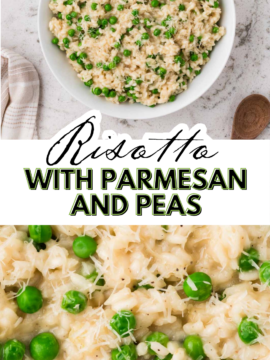

How to Make Parmesan and Pea Risotto
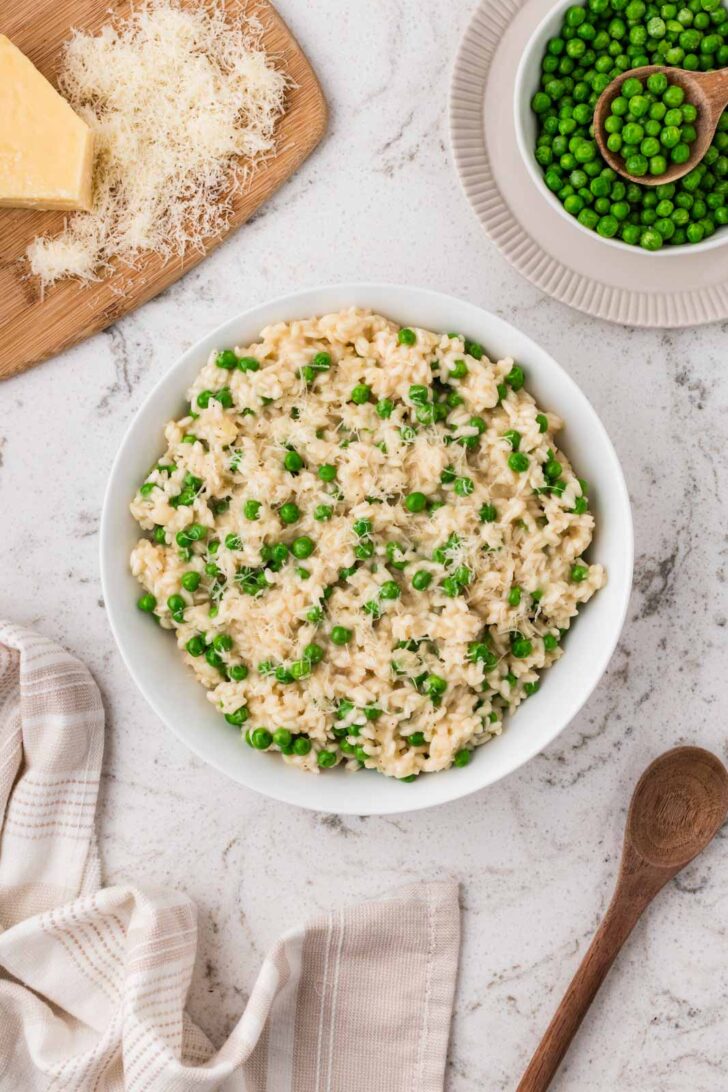
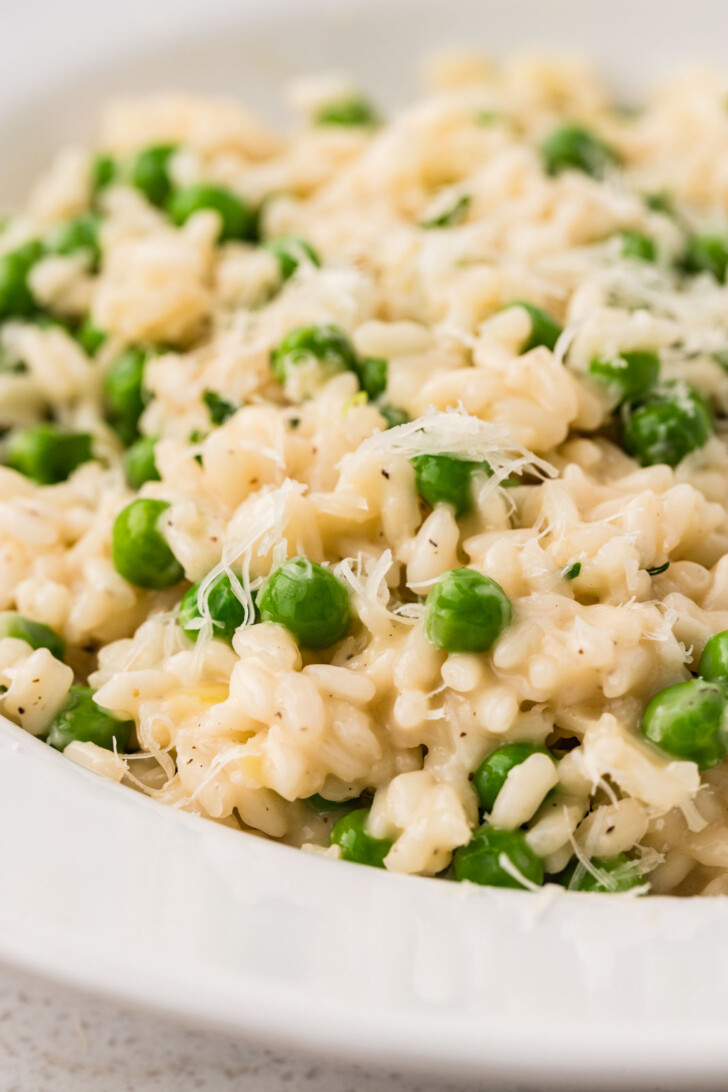
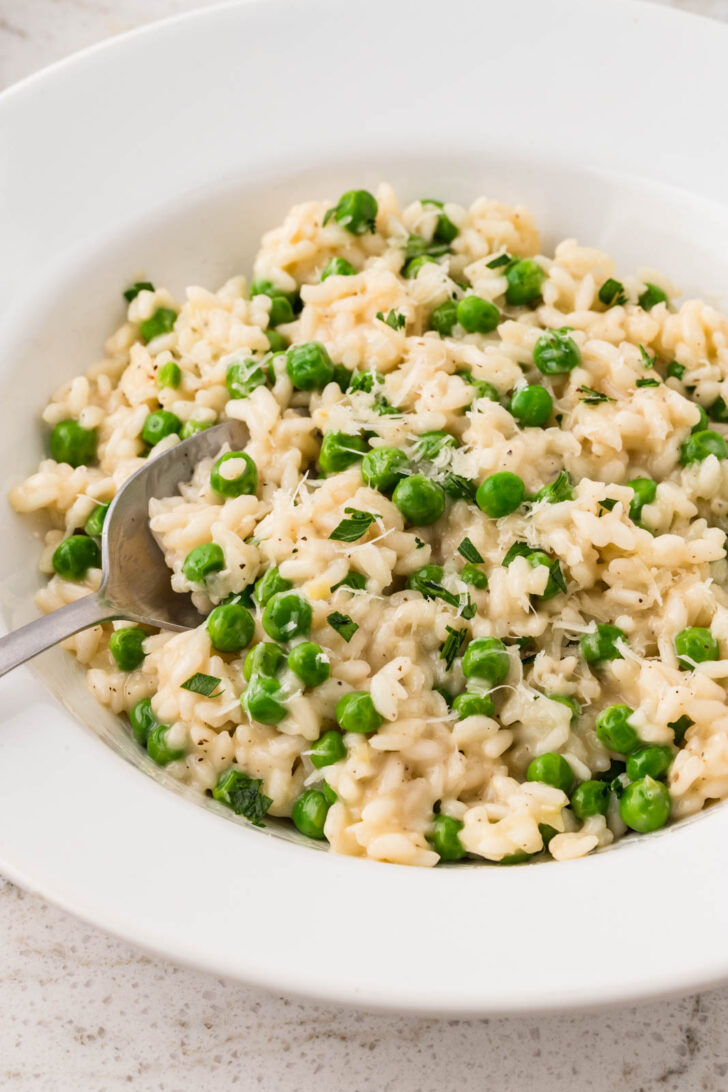
If you have ever felt intimidated by making risotto (I certainly have), this recipe is the perfect place to dip your toes in. With a few helpful tips and a little patience, you can create a creamy spring risotto that is rich and cozy, but still light enough for spring thanks to sweet green peas, fresh parsley, and plenty of Parmesan cheese. This Parmesan and pea risotto has that classic velvety texture you expect from a restaurant, made right in your kitchen.
Looking for more spring recipes? Find my favorites below:
Roasted Asparagus
Grilled Pesto Shrimp
One Pot Chicken and Zucchini Bake

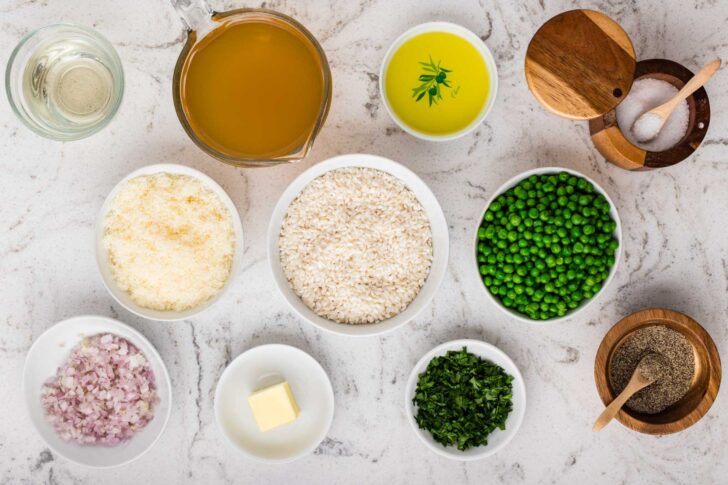
What you’ll need to make this Parmesan and Pea Risotto:
32-ounce container low-sodium chicken broth
2 tablespoons unsalted butter, divided
1 tablespoon olive oil
1 large shallot, finely minced
1 ½ cups Arborio rice
½ cup dry white wine
1 teaspoon kosher salt
½ teaspoon ground black pepper
1 ½ cups frozen peas
1 cup freshly grated Parmesan cheese
1 tablespoon chopped fresh parsley, optional
Why You’ll Love This Pea Risotto
- Creamy, rich, and comforting
- Full of fresh spring flavor
- Made with simple pantry staples
- Easy enough for beginner cooks
- Perfect as a side dish or vegetarian main course
- Restaurant-quality texture at home
- Ready in about 40 minutes
What Is Risotto?
Risotto is a traditional Italian rice dish made by slowly cooking short-grain rice with warm broth until it becomes creamy and tender. Unlike regular rice dishes, risotto gets its signature texture from the starch released while the rice cooks.
Arborio rice is the most common rice used for risotto because it contains a high amount of starch, which helps create that luxurious creamy consistency without adding heavy cream.
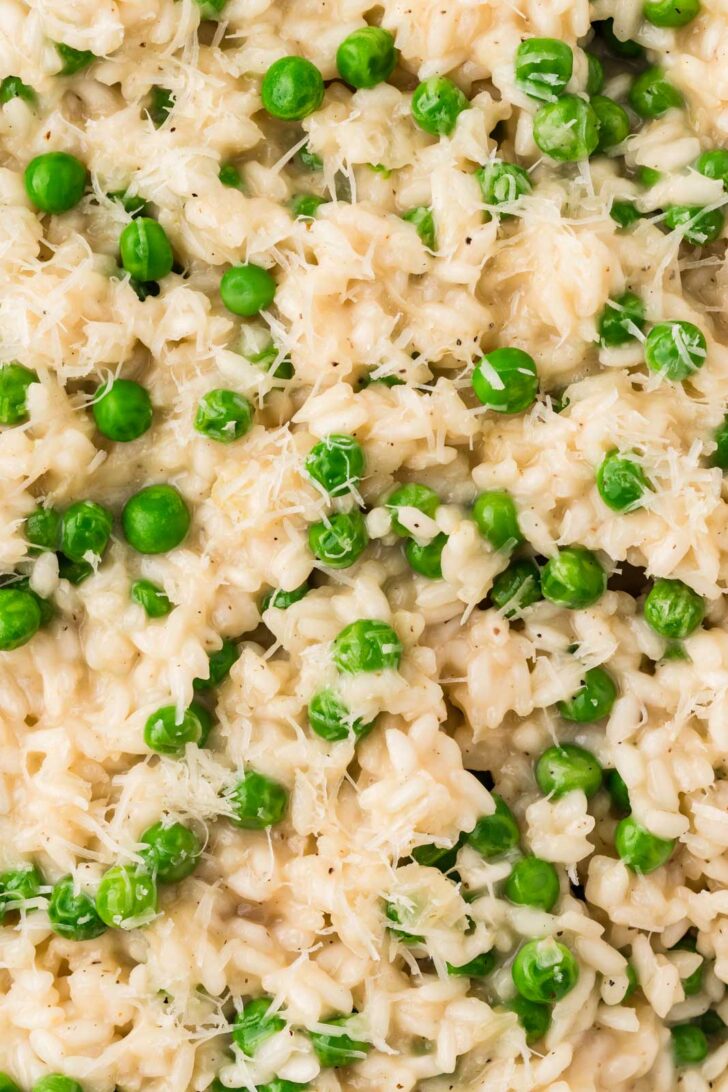
How to Make Parmesan and Pea Risotto, Step-By-Step
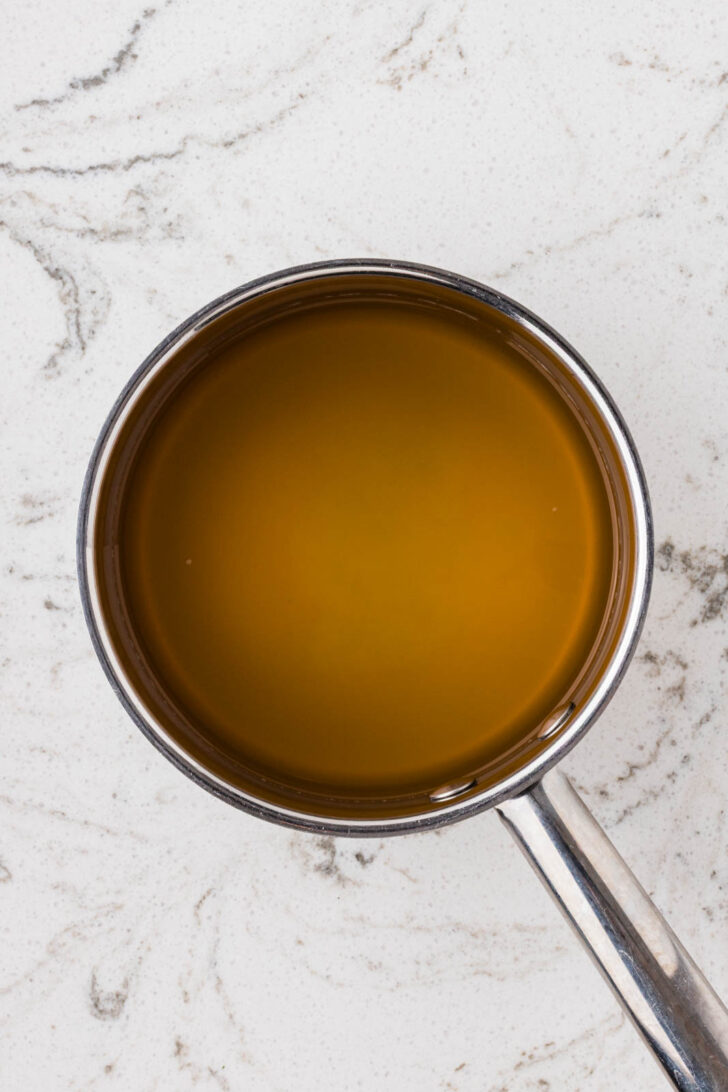
Step 1: Warm the Broth
Add 4 cups of low-sodium chicken broth to a medium saucepan and warm it over low heat until steaming but not boiling. Keep it warm while cooking the risotto.
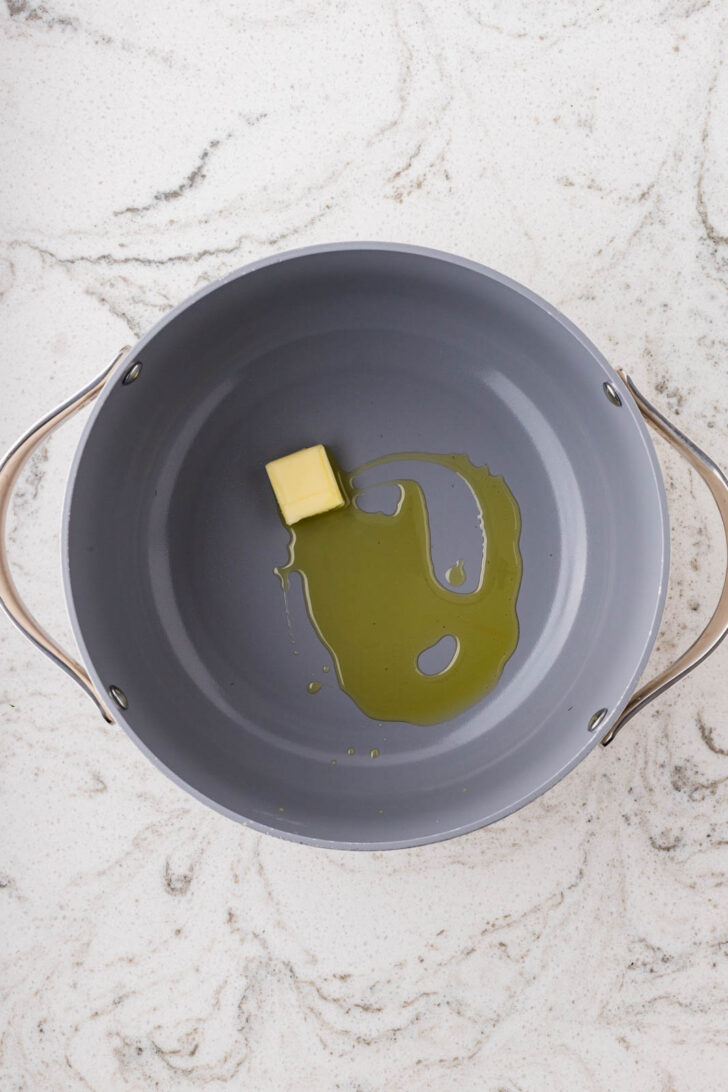
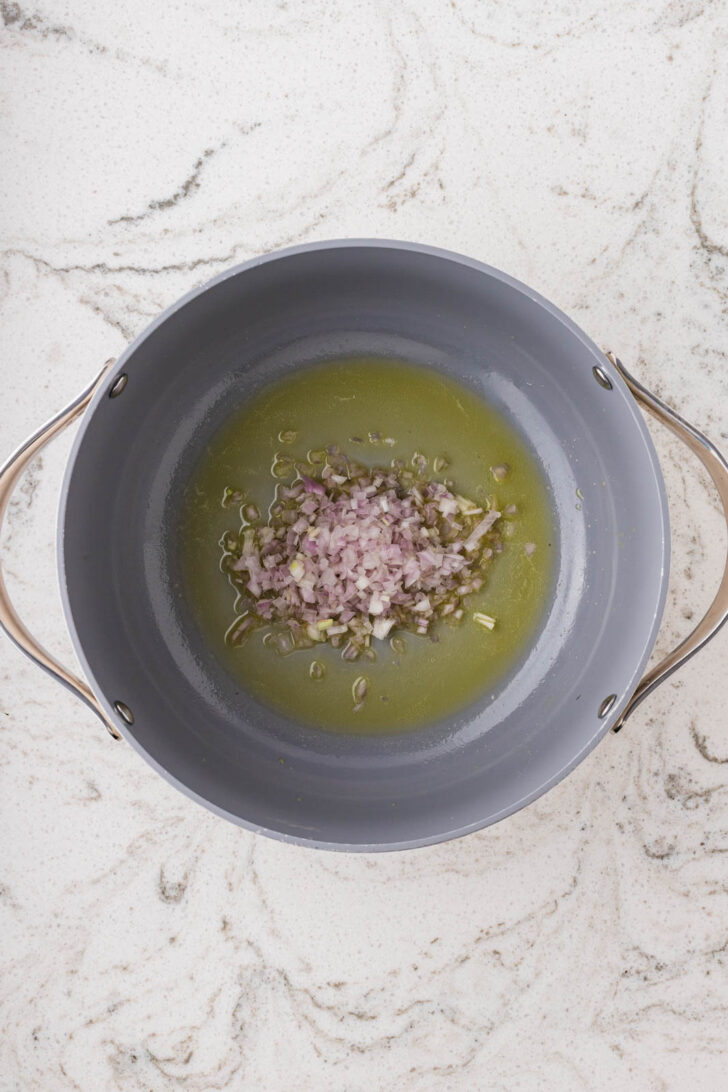
Step 2: Sauté the Shallots
Add 1 tablespoon butter and olive oil to a large skillet over medium heat. Stir in the minced shallot and cook for 2 to 3 minutes until softened and fragrant.
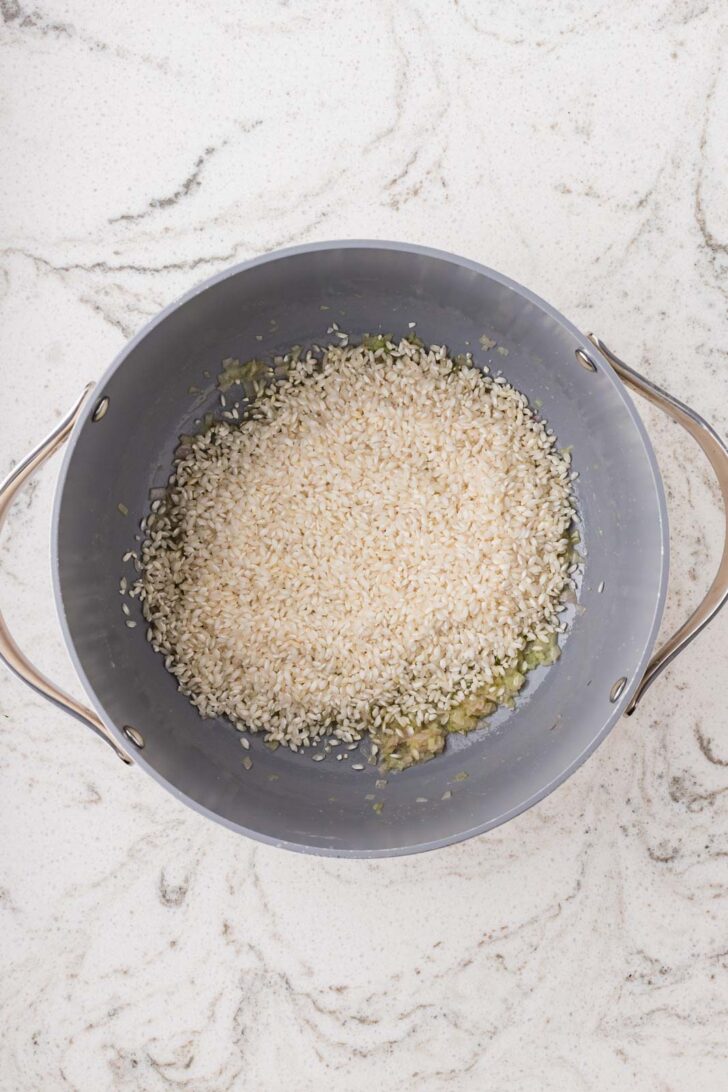
Step 3: Toast the Rice
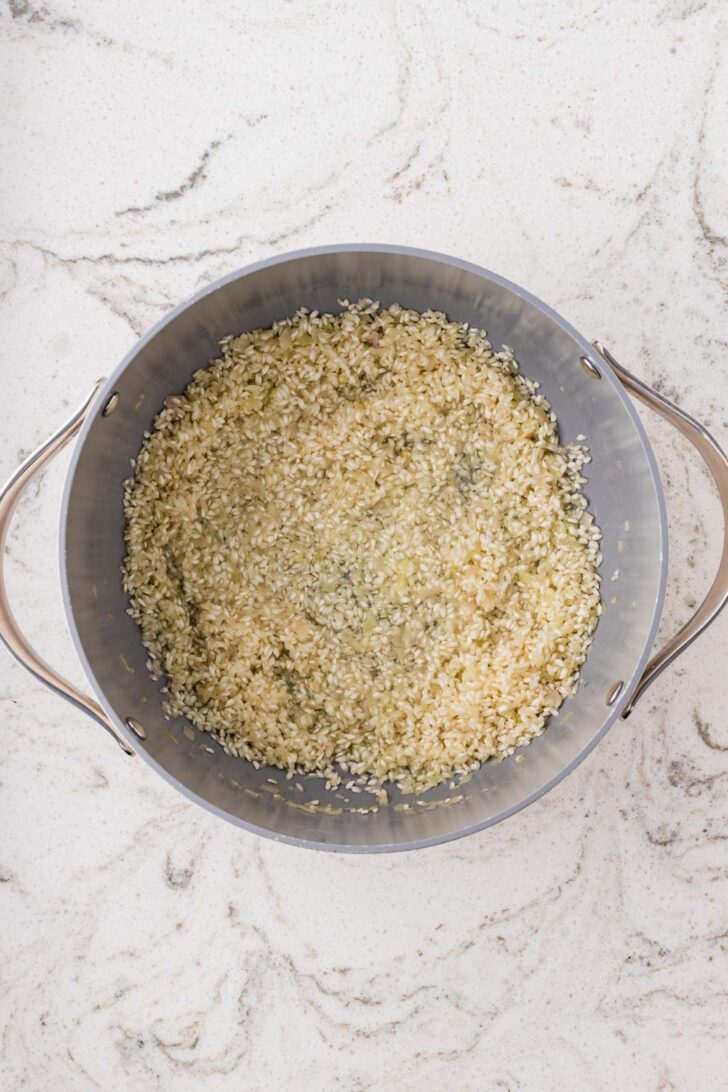
Add the Arborio rice and cook for 1 to 2 minutes, stirring often. The edges should look slightly translucent while the center stays white.
Step 4: Add the Wine
Pour in the white wine and stir until it is mostly absorbed into the rice.
Step 5: Slowly Add the Broth
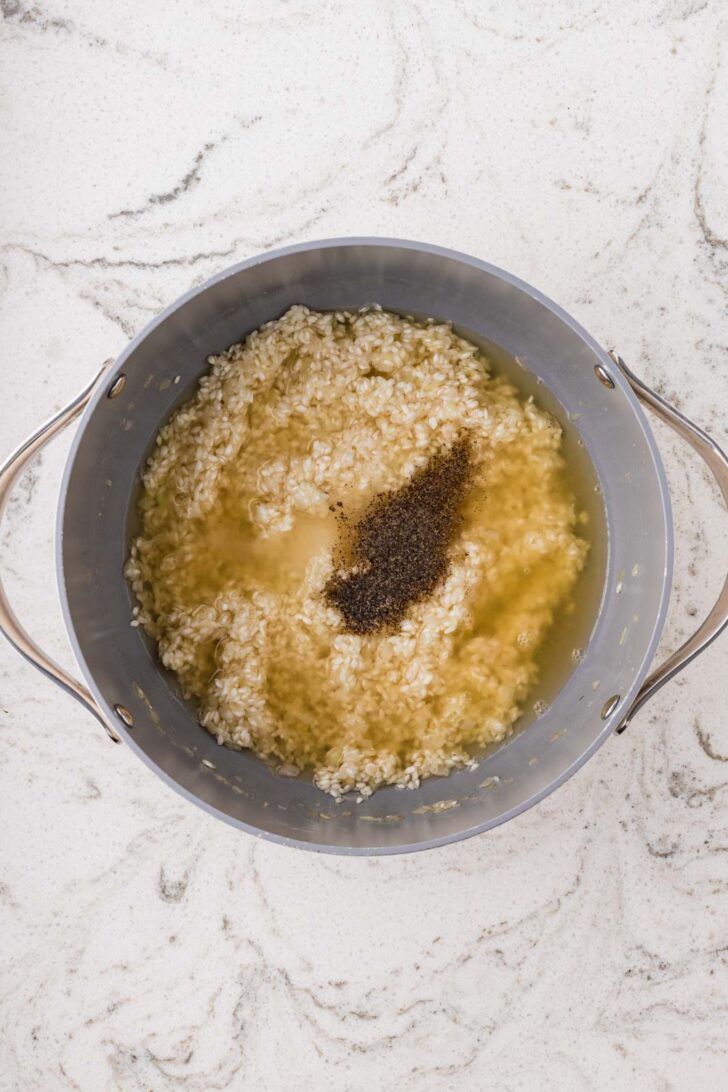
Add kosher salt, black pepper, and 1 cup of warm broth. Stir often until the liquid is mostly absorbed.
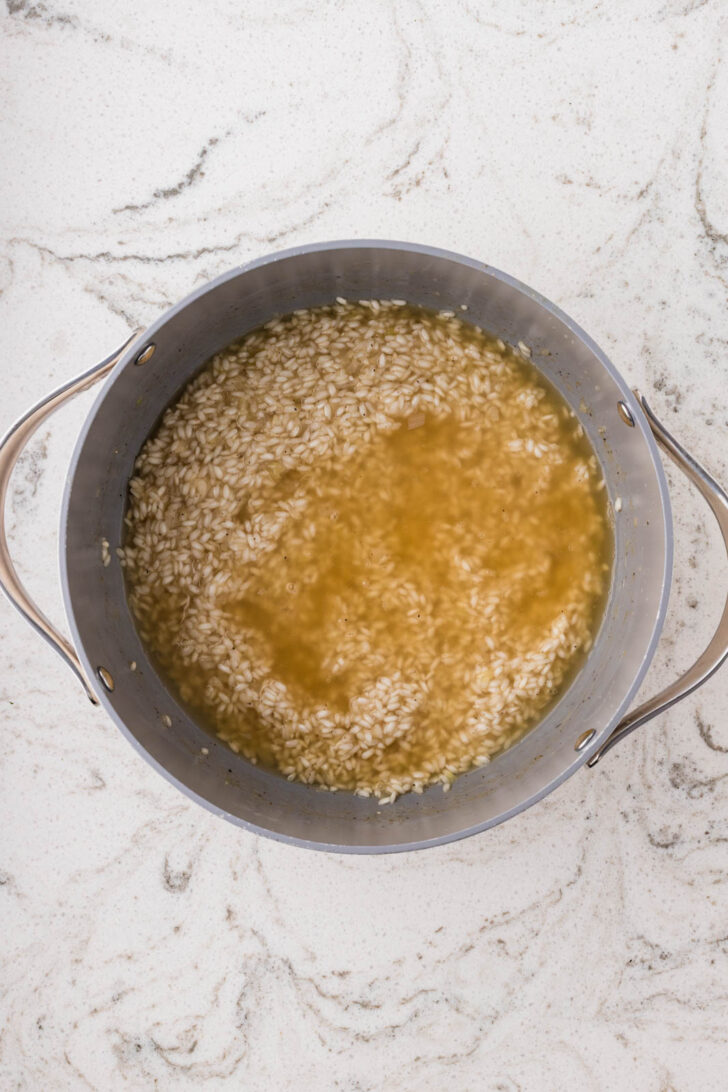
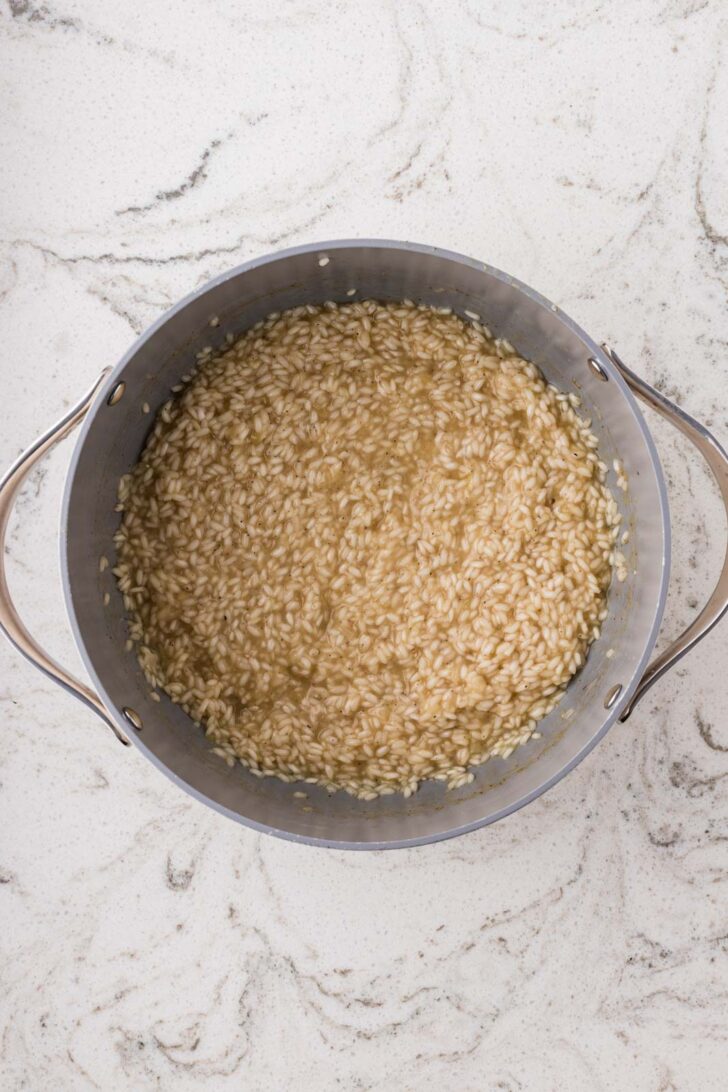
Continue adding broth about ½ cup at a time, allowing each addition to absorb before adding more. This process takes about 20 to 25 minutes.
Step 6: Stir in the Peas
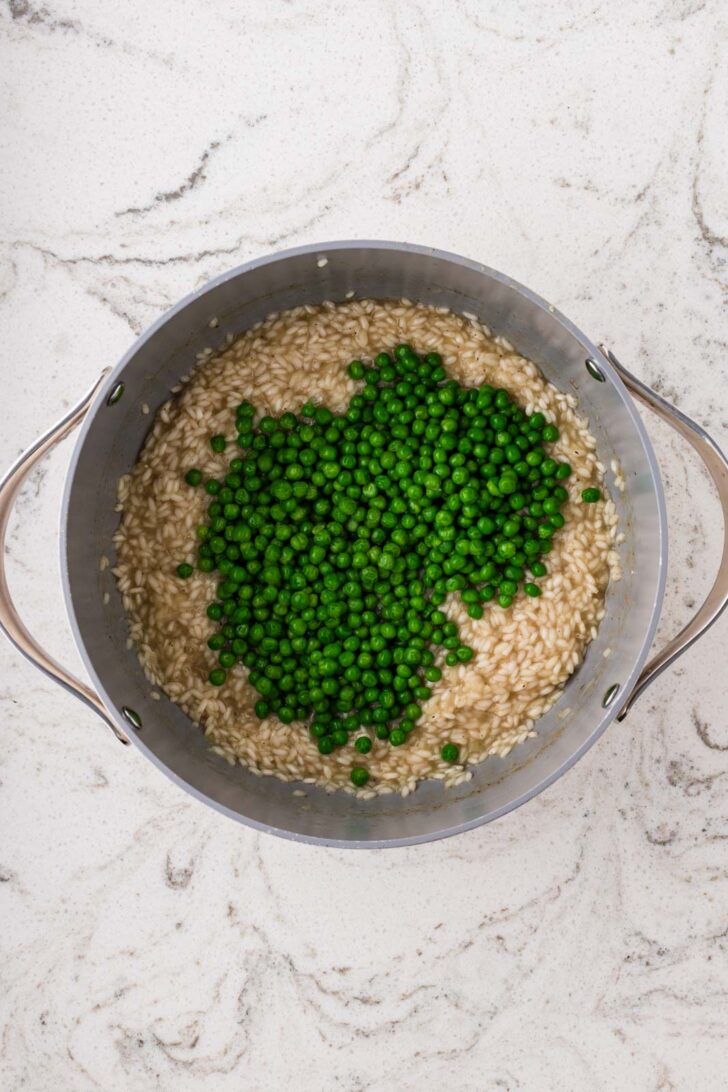
Once the rice is creamy and tender with a slight bite, stir in the frozen peas. Cook for 2 to 3 minutes until heated through.
Step 7: Finish with Butter and Parmesan
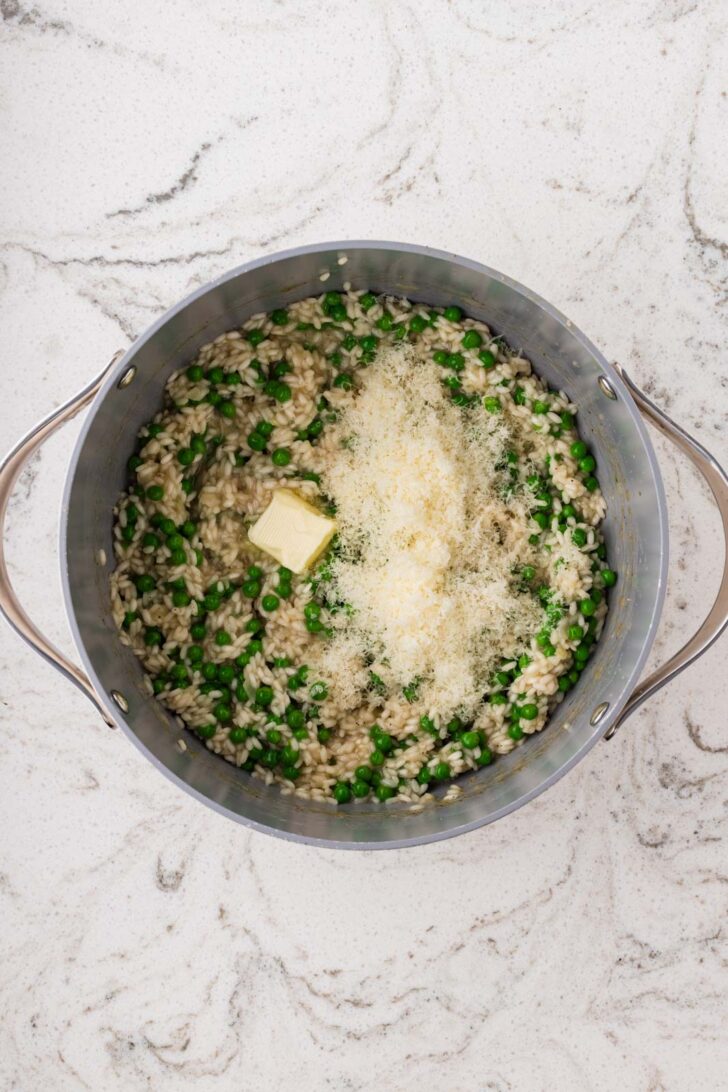
Turn off the heat and stir in the remaining butter and freshly grated Parmesan cheese until creamy and glossy.
Taste and adjust seasoning if needed.
Step 8: Garnish and Serve
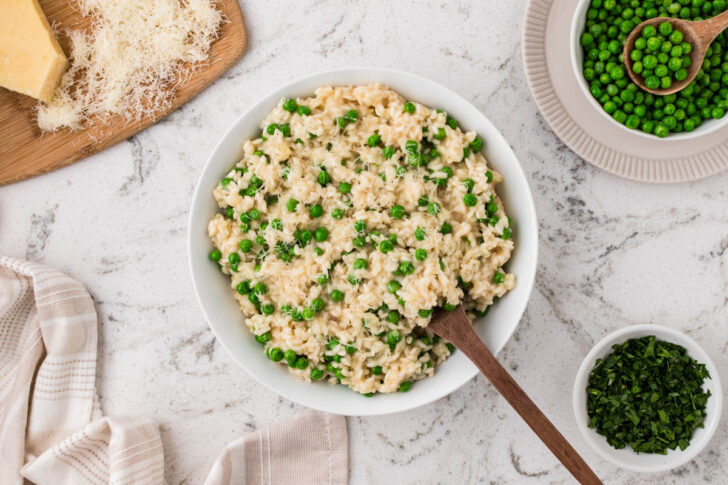
Top with fresh parsley and extra Parmesan if desired. Serve immediately while warm and creamy.
The Secret to Perfect Creamy Risotto
Keep the Broth Warm
Cold broth lowers the temperature of the rice and interrupts the cooking process. Warm broth helps the rice cook evenly and release starch gradually.
Stir Often, Not Constantly
You do not need to stir every second, but regular stirring helps release starch and prevents sticking.
Add Broth Gradually
Adding broth slowly allows the rice to absorb liquid properly and create the creamy texture risotto is known for.
Do Not Overcook the Rice
Perfect risotto should be tender with a slight bite in the center. Mushy risotto loses its texture and flavor.
Use Freshly Grated Parmesan
Fresh Parmesan melts smoothly and creates a silky texture. Pre-shredded cheese can make risotto grainy.
Add the Peas at the End
Adding peas near the end keeps them bright green, sweet, and tender instead of mushy.
What Does Risotto Texture Should Be Like?
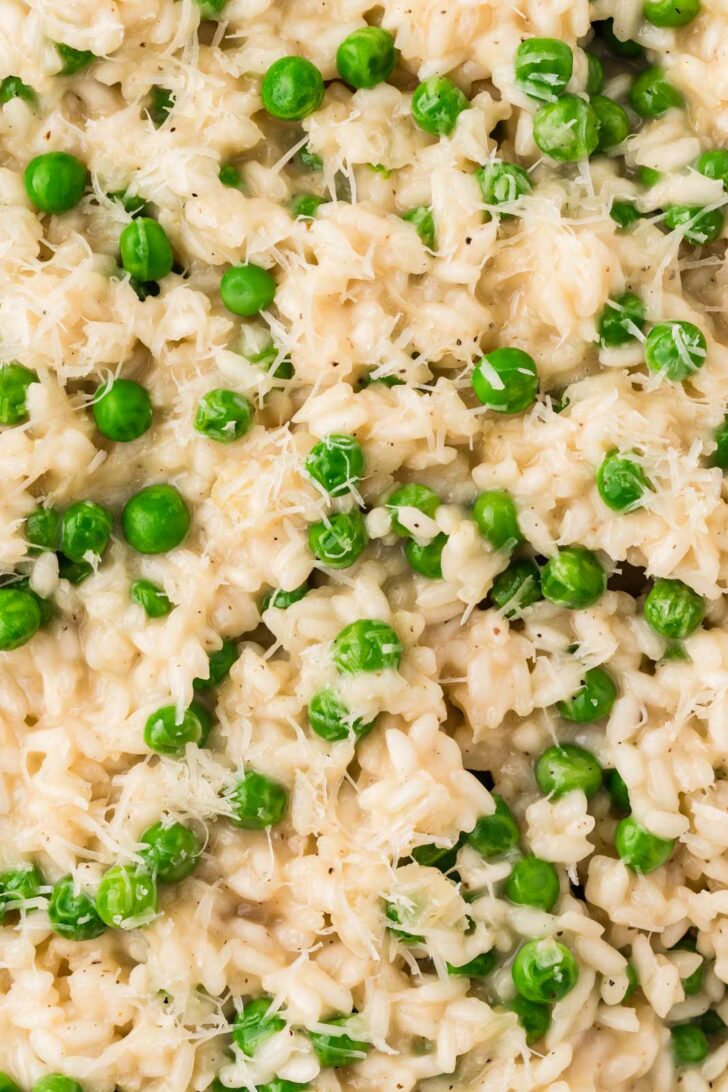
A good risotto should slowly spread across the plate when served. It should look creamy and loose, not thick or stiff like rice pilaf.
If your risotto thickens too much before serving, stir in a splash of warm broth to loosen it back up.
Best Wine for Risotto
Dry white wines work best because they add acidity without sweetness. Great options include:
- Pinot Grigio
- Sauvignon Blanc
- Chardonnay
Avoid sweet wines since they can overpower the savory flavors.
What to Serve with Pea Risotto
This Parmesan pea risotto pairs beautifully with:
- Grilled chicken
- Sheet pan salmon
- Grilled pesto shrimp
- Roasted asparagus
- Simple green salad
- Crusty bread
Frequently Asked Questions
What rice is best for pea risotto?
Arborio rice is the classic choice because its high starch content creates creamy risotto. Carnaroli rice also works well.
Can I make risotto without wine?
Yes. Replace the wine with extra warm broth. The flavor will be slightly less bright but still delicious.
Can I use fresh peas instead of frozen peas?
Absolutely. Fresh spring peas work beautifully. Add them during the final few minutes of cooking.
Why is my risotto gluey?
Overstirring or overcooking can make risotto gluey. Also avoid rinsing the rice before cooking.
How do I know when risotto is done?
The rice should be creamy and tender with a slight bite in the center, similar to al dente pasta.
Can risotto be made ahead?
Risotto is best served fresh, but leftovers can still be delicious when reheated gently with extra broth.
Storage and Reheating
Storage
Allow the risotto to cool slightly before transferring it to an airtight container. Refrigerate for up to 3 days.
Freezing
Freezing is not recommended because the texture can become mushy once thawed.
Reheating
Warm gently in a skillet or saucepan over medium-low heat with a splash of broth, milk, or water. Stir until creamy again.
Pro Tips for Restaurant-Style Risotto
- Use a wide skillet for even cooking
- Keep the broth warm the entire time
- Taste the rice during cooking
- Finish with butter for shine and richness
- Serve immediately for the creamiest texture
- Use high-quality Parmesan cheese for the best flavor
Love this recipe? Please leave a 5-star ⭐️⭐️⭐️⭐️⭐️ rating in the recipe card below ⬇️ and/or a review in the comment section further down.
Hungry for more? Follow Suburban Simplicity on Facebook, Instagram, YouTube, and Pinterest to see more DIYs, recipes, and home tips!
Also, don’t forget to sign up for email!
I only send one email a week, and it’ll include my latest recipes, DIYs, and tips, information about exclusive “email only” giveaways, and more! See form below!
Want to subscribe to the Suburban Simplicity Recipe Club? It’s only $5 per month, and you’ll get ad-free PDFs of any new recipes that I post while supporting me at the same time! Join the club, here.
Parmesan and Pea Risotto
Ingredients
- 1 32-ounce container low-sodium chicken broth
- 2 tablespoons unsalted butter, divided
- 1 tablespoon olive oil
- 1 large shallot, finely minced
- 1 ½ cups arborio rice
- ½ cup dry white wine
- 1 teaspoon kosher salt
- ½ teaspoon ground black pepper
- 1 ½ cups frozen peas
- 1 cup freshly grated Parmesan cheese
- 1 tablespoon chopped fresh parsley, optional for garnish

Equipment
- saucepan
- cutting board
- wooden spoon
- measuring spoons
- cheese grater
Instructions
- Add 4 cups of low-sodium chicken broth to a medium saucepan and warm it over low heat until steaming, but not boiling. Keep the broth warm on the stove while you start the risotto in a separate large pot or skillet.
- While the broth is warming, add 1 tablespoon unsalted butter and 1 tablespoon olive oil to a large pot over medium heat.
- Add 1 large finely minced shallot to the skillet and cook for 2-3 minutes, stirring often, until softened and fragrant but not browned.
- Stir in 1 ½ cups arborio rice and cook with the shallots for 1-2 minutes, stirring often. Cook until the edges of the rice are slightly translucent and the center is still white.
- Pour in ½ cup dry white wine and stir until the wine is mostly absorbed into the rice.
- Add 1 teaspoon of kosher salt, ½ teaspoon ground black pepper, and 1 cup of the warm broth. Stir often until most of the broth has been absorbed before adding more.
- Continue adding the warm broth, about ½ cup at a time, stirring often and letting each addition mostly absorb before adding the next. This should take about 20-25 minutes.
- When the rice is creamy and tender with a slight bite in the center, stir in 1 ½ cups frozen peas and cook for 2-3 minutes, until the peas are hot and bright green.
- Turn off the heat and stir in the remaining 1 tablespoon unsalted butter and 1 cup freshly grated Parmesan cheese until the risotto is glossy and creamy.
- Taste and adjust the salt only if needed, depending on the saltiness of your broth and Parmesan.
- Serve warm and garnish with 1 tablespoon chopped fresh parsley if using. ENJOY!
Notes
- Warming the broth helps the risotto cook evenly because each addition keeps the rice at a steady temperature. Cold broth can slow the cooking down and make the rice release its starch less smoothly, which can affect that creamy risotto texture.
- Risotto should be creamy and loose when it is finished, not stiff like rice pilaf. If it thickens too much before serving, stir in a splash of warm broth to loosen it.
- Shallots are the best choice here because they give the risotto a gentle onion flavor without taking over the sweet peas and Parmesan.
- Freshly grated Parmesan melts much more smoothly than pre-grated or shredded Parmesan, which can make the risotto taste grainy.
- Stir often, but you do not have to stir every single second. The goal is to help the rice release starch while keeping it from sticking to the bottom of the pan.