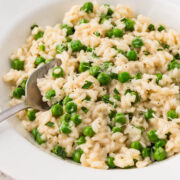
Parmesan and Pea Risotto
This creamy pea risotto is the perfect spring risotto recipe made with Parmesan, sweet peas, and Arborio rice.
Servings 4
Calories 522kcal
Equipment
- saucepan
- cutting board
- wooden spoon
- measuring spoons
- cheese grater
Ingredients
- 1 32-ounce container low-sodium chicken broth
- 2 tablespoons unsalted butter divided
- 1 tablespoon olive oil
- 1 large shallot finely minced
- 1 ½ cups arborio rice
- ½ cup dry white wine
- 1 teaspoon kosher salt
- ½ teaspoon ground black pepper
- 1 ½ cups frozen peas
- 1 cup freshly grated Parmesan cheese
- 1 tablespoon chopped fresh parsley optional for garnish

Instructions
- Add 4 cups of low-sodium chicken broth to a medium saucepan and warm it over low heat until steaming, but not boiling. Keep the broth warm on the stove while you start the risotto in a separate large pot or skillet.
- While the broth is warming, add 1 tablespoon unsalted butter and 1 tablespoon olive oil to a large pot over medium heat.
- Add 1 large finely minced shallot to the skillet and cook for 2-3 minutes, stirring often, until softened and fragrant but not browned.
- Stir in 1 ½ cups arborio rice and cook with the shallots for 1-2 minutes, stirring often. Cook until the edges of the rice are slightly translucent and the center is still white.
- Pour in ½ cup dry white wine and stir until the wine is mostly absorbed into the rice.
- Add 1 teaspoon of kosher salt, ½ teaspoon ground black pepper, and 1 cup of the warm broth. Stir often until most of the broth has been absorbed before adding more.
- Continue adding the warm broth, about ½ cup at a time, stirring often and letting each addition mostly absorb before adding the next. This should take about 20-25 minutes.
- When the rice is creamy and tender with a slight bite in the center, stir in 1 ½ cups frozen peas and cook for 2-3 minutes, until the peas are hot and bright green.
- Turn off the heat and stir in the remaining 1 tablespoon unsalted butter and 1 cup freshly grated Parmesan cheese until the risotto is glossy and creamy.
- Taste and adjust the salt only if needed, depending on the saltiness of your broth and Parmesan.
- Serve warm and garnish with 1 tablespoon chopped fresh parsley if using. ENJOY!
Notes
- Warming the broth helps the risotto cook evenly because each addition keeps the rice at a steady temperature. Cold broth can slow the cooking down and make the rice release its starch less smoothly, which can affect that creamy risotto texture.
- Risotto should be creamy and loose when it is finished, not stiff like rice pilaf. If it thickens too much before serving, stir in a splash of warm broth to loosen it.
- Shallots are the best choice here because they give the risotto a gentle onion flavor without taking over the sweet peas and Parmesan.
- Freshly grated Parmesan melts much more smoothly than pre-grated or shredded Parmesan, which can make the risotto taste grainy.
- Stir often, but you do not have to stir every single second. The goal is to help the rice release starch while keeping it from sticking to the bottom of the pan.
Nutrition
Calories: 522kcal | Carbohydrates: 70g | Protein: 17g | Fat: 16g | Saturated Fat: 8g | Polyunsaturated Fat: 1g | Monounsaturated Fat: 6g | Trans Fat: 0.2g | Cholesterol: 32mg | Sodium: 989mg | Potassium: 266mg | Fiber: 5g | Sugar: 4g | Vitamin A: 872IU | Vitamin C: 24mg | Calcium: 321mg | Iron: 4mg