

Easy Chicken Pot Pie Recipe (Creamy Filling, Flaky Crust)
This easy chicken pot pie recipe uses rotisserie chicken and refrigerated crust for a creamy, from-scratch filling and a golden, flaky top in under 90 minutes.

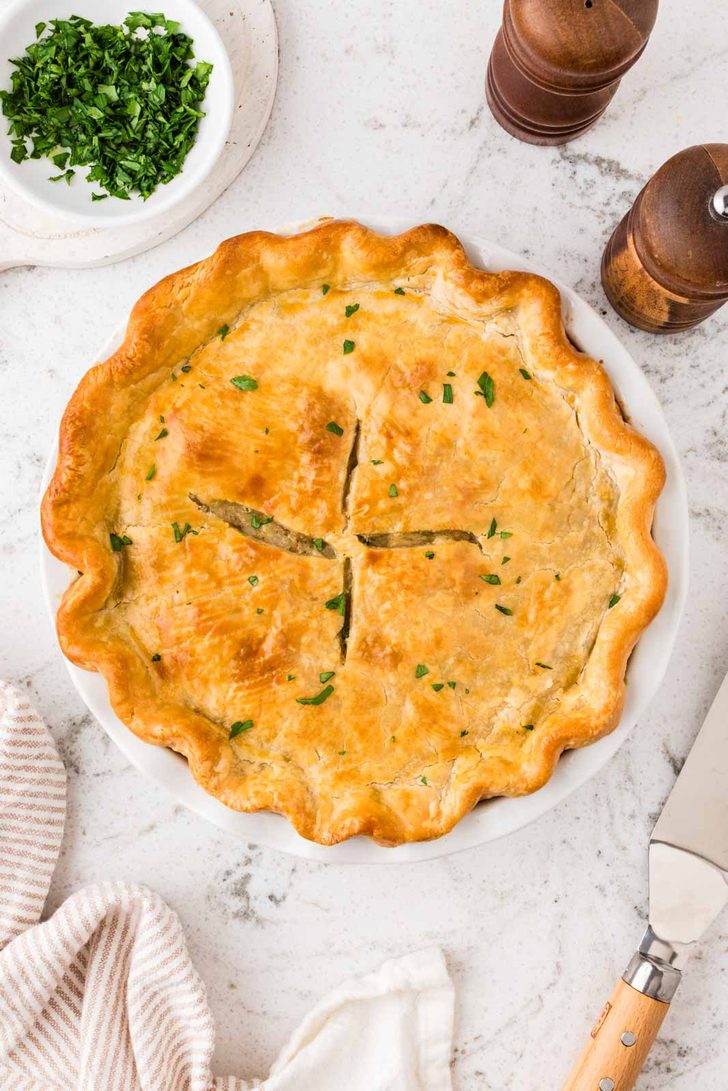
Easy Chicken Pot Pie Recipe
This chicken pot pie recipe gives you the best parts of “homemade” without the two-hour commitment. The filling is a real from-scratch gravy, built on a butter and flour roux with chicken broth and whole milk, so it tastes nothing like other “easy” canned soup versions of CPP. But the chicken comes from a rotisserie bird (I like Costco’s) and the crust comes from a box, which means you can have a bubbling, golden-topped pot pie on the table on a Tuesday.
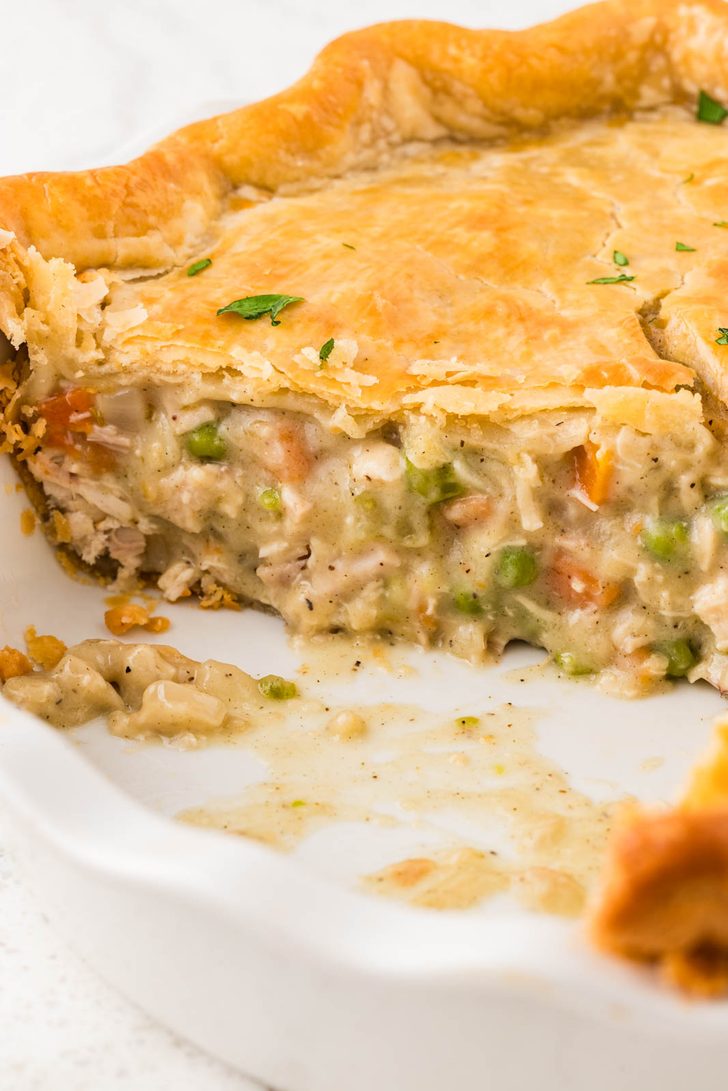
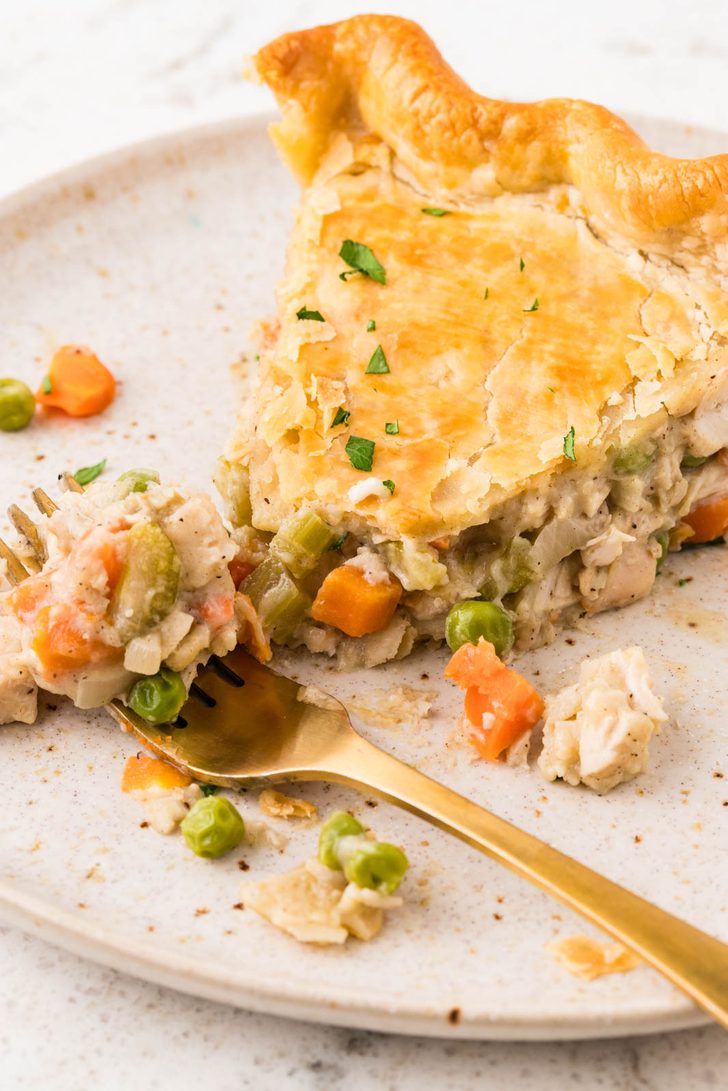
The thing that makes or breaks a pot pie is the filling, and most of them fail in the same two ways: too thin, so it floods the plate the second you cut into it, or too bland, because the broth never got properly seasoned. I’ll show you exactly what the filling should look like before it goes into the crust, and there is a troubleshooting section further down to address every area that this recipe can go sideways.
Why You’ll Love This Chicken Pot Pie
- The filling actually sets. You build a proper roux and simmer the sauce until it coats a spoon, so you get clean slices instead of a soupy mess.
- Rotisserie chicken does the heavy lifting. No poaching, no waiting, and you get the roasted flavor for free.
- Double crust, top and bottom. Biscuit-topped versions are fine, but a bottom crust is what makes it a pie.
- One skillet for the filling. Everything happens in the same pan before it goes into the dish.
- It reheats well. Leftovers are genuinely good the next day, which is not true of every casserole.
If this is your kind of dinner, you will probably also like my Crock Pot Chicken Noodle Soup, which runs on the same cozy logic.
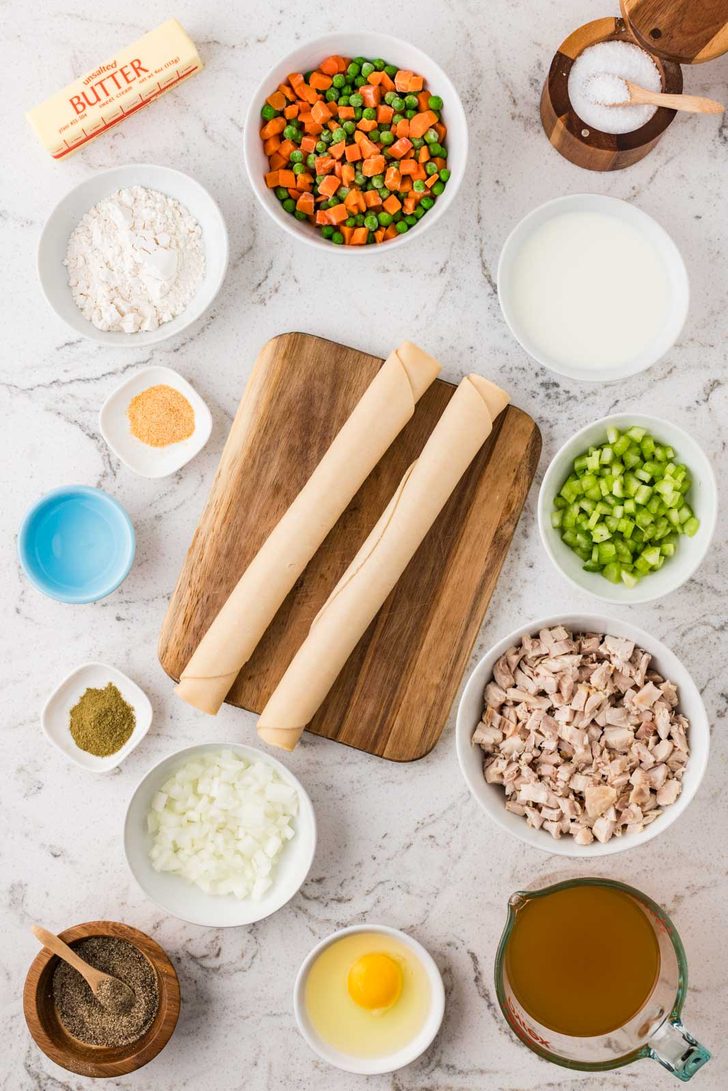
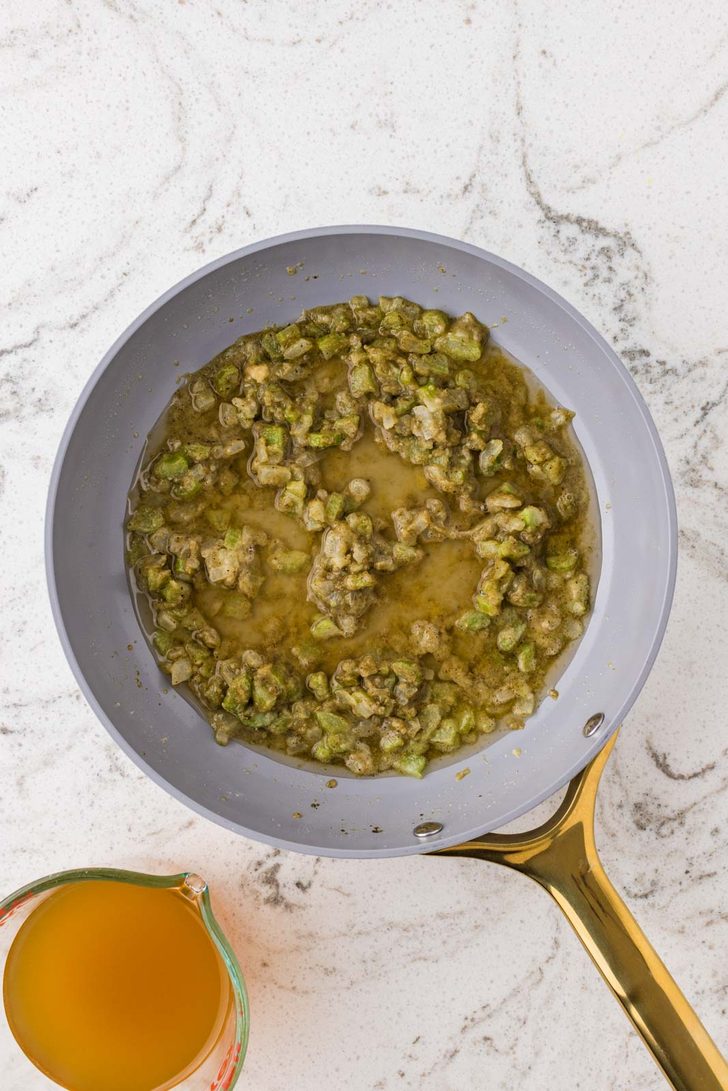
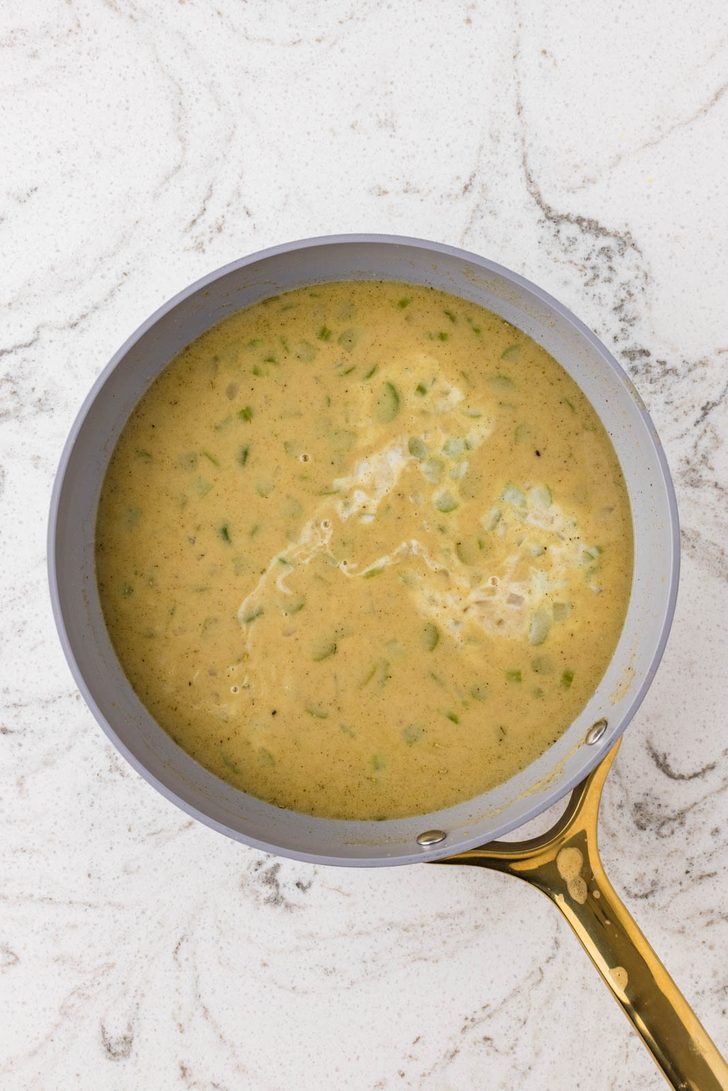
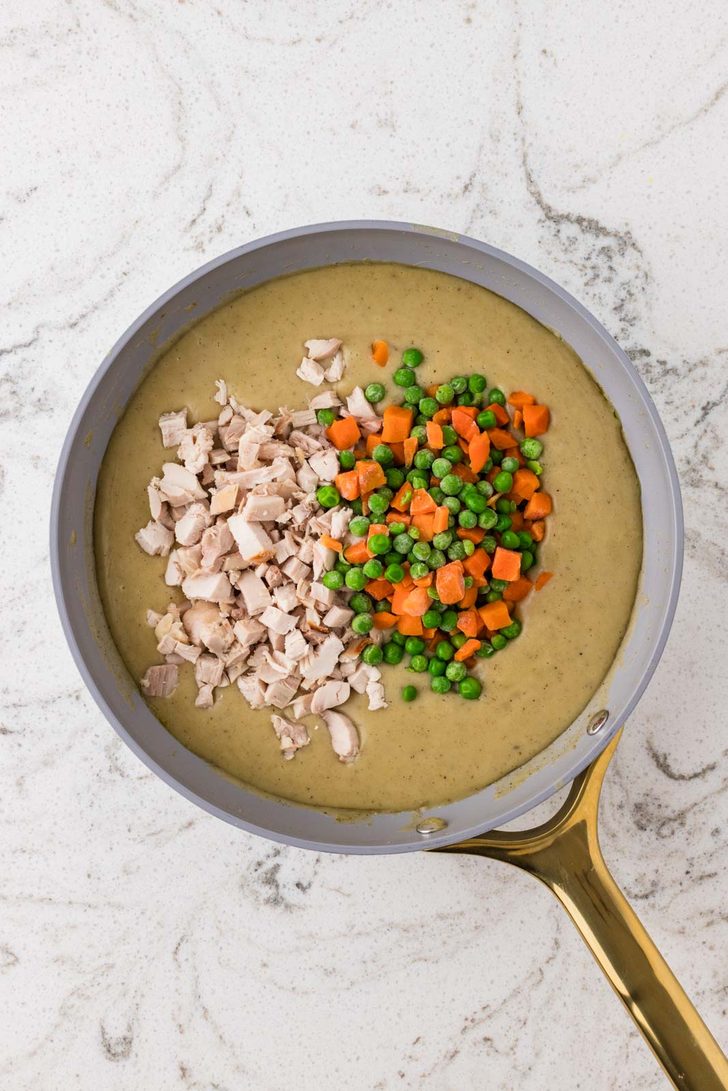
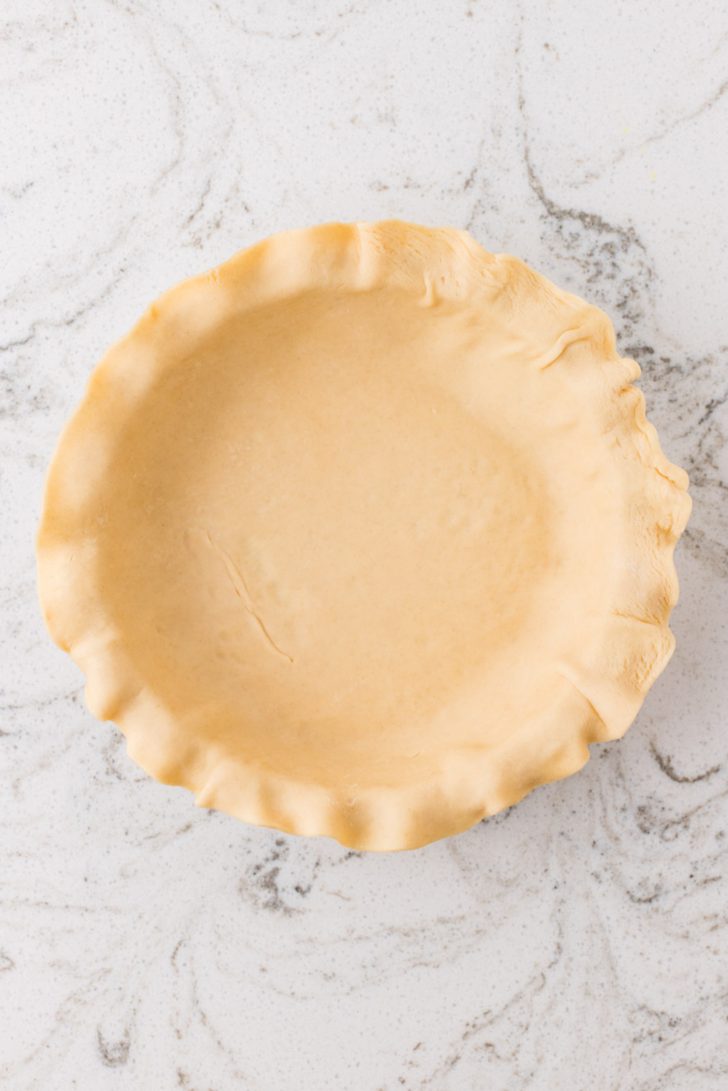
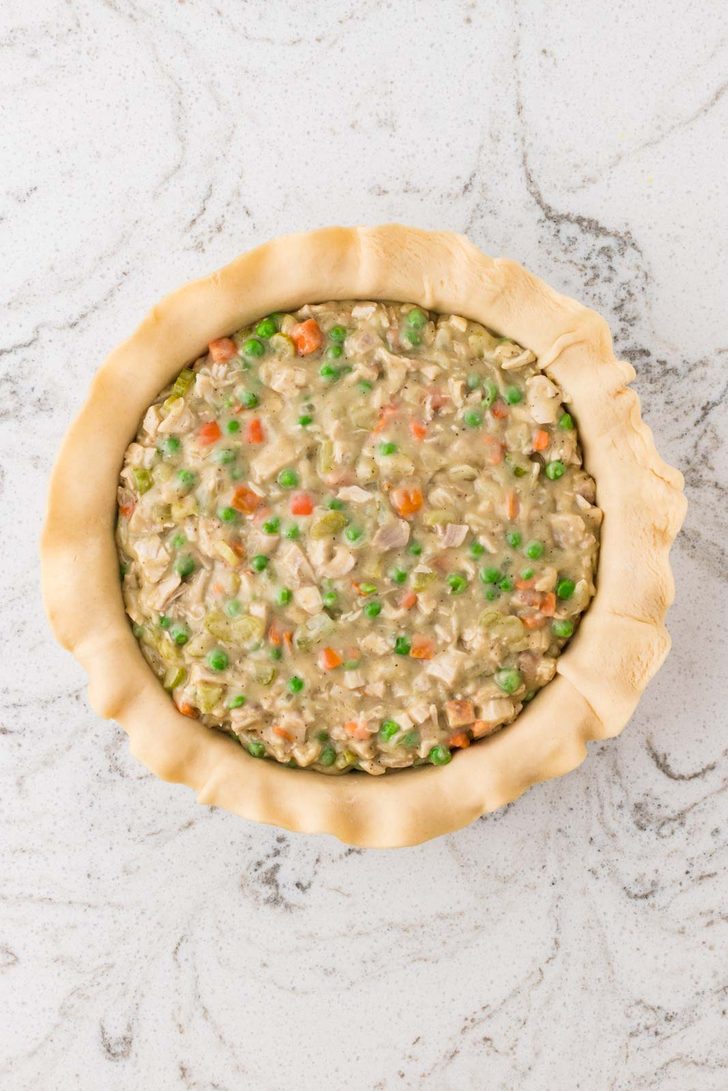
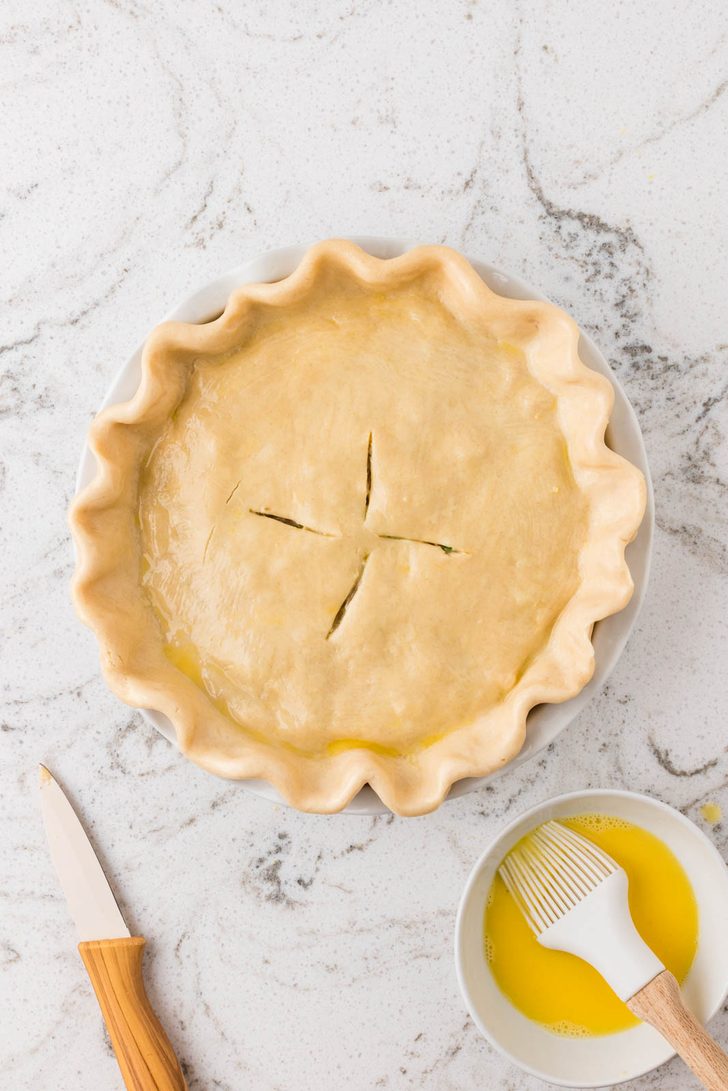
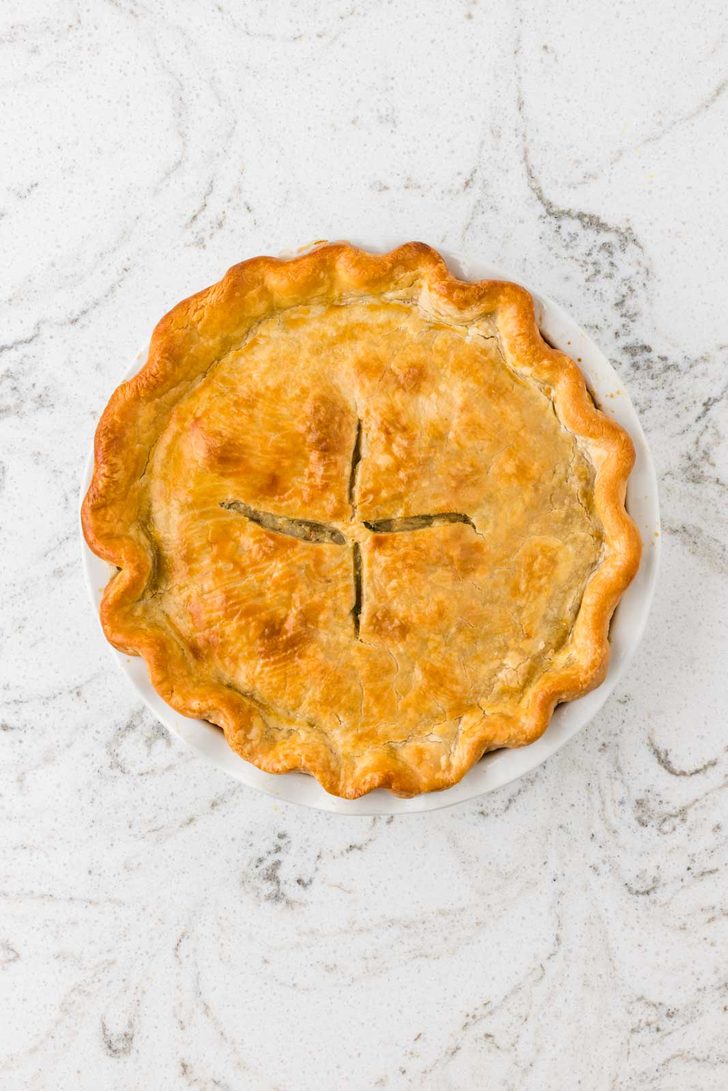
How to Make Chicken Pot Pie
1. Soften the crust and heat the oven
Preheat to 425°F and set the pie crusts out to come to room temperature while you cook. Cold crust cracks. Room temperature crust folds.
2. Sweat the vegetables
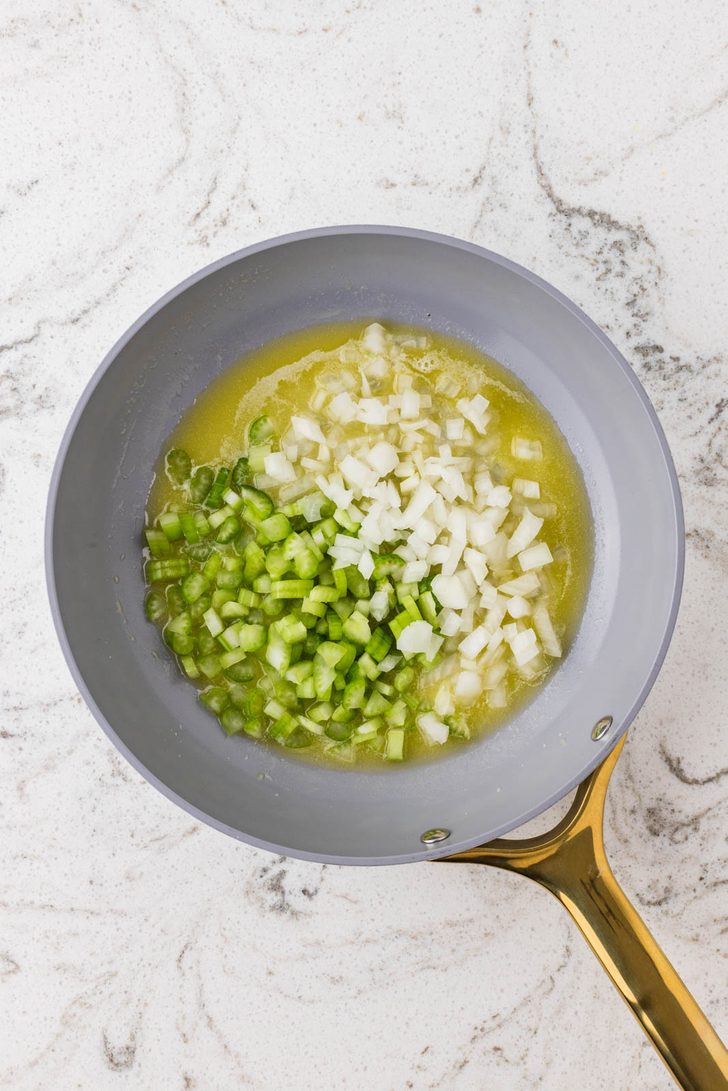
Melt the butter in a large skillet over medium heat, then add the onion and celery. Cook 4 to 5 minutes, stirring now and then, until they have softened and turned translucent. You are not browning them, just taking the raw edge off.
3. Make the roux
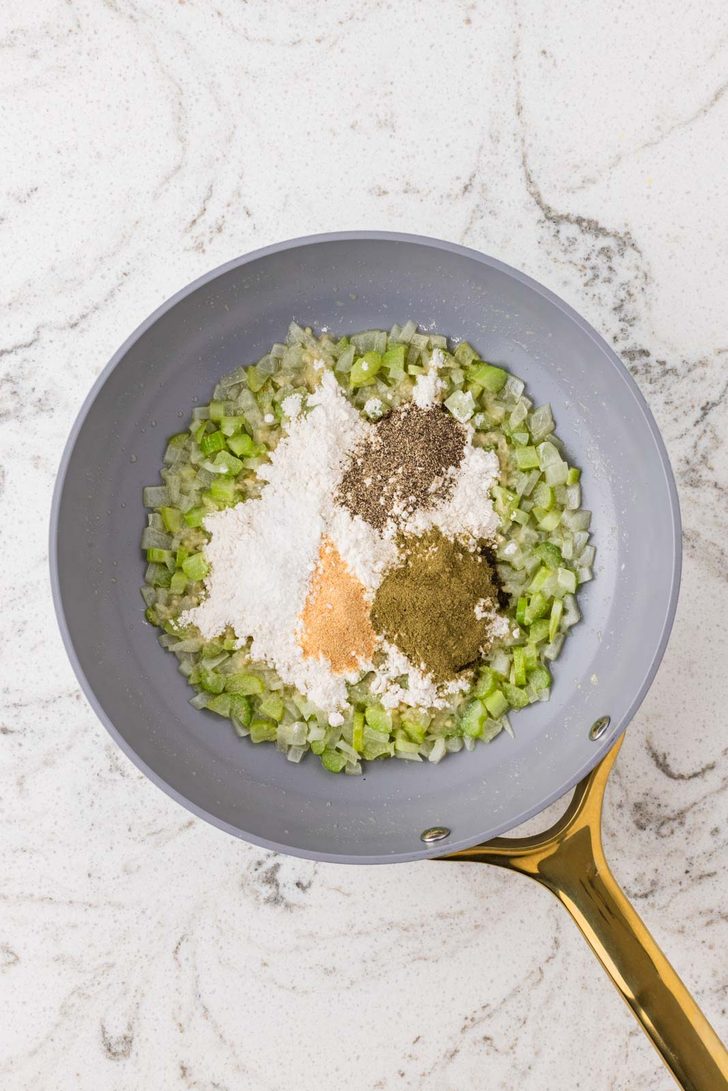
Sprinkle the flour, poultry seasoning, garlic powder, salt, and pepper over the vegetables. Stir constantly for one full minute. The flour should absorb the butter and coat everything in a pale, slightly shaggy paste. Do not let it take on color. Browned roux tastes nutty, which is lovely in gumbo and wrong here.
4. Build the sauce
Pour in the chicken broth slowly, whisking or stirring the whole time so no lumps form. Add the milk. Bring it to a gentle simmer and cook 3 to 5 minutes, stirring often, until the sauce is thick and creamy.
Here is the test: drag a spoon through it and lift it out. The sauce should coat the back of the spoon, and when you run a finger through that coating, the line should hold instead of filling back in. If it is still thin and runny at this stage, it will be thin and runny in the pie. Give it another minute or two.
5. Add the chicken and vegetables
Stir in the chicken and the thawed, drained peas and carrots. Cook 2 to 3 minutes, just until everything is hot. Pull the skillet off the heat.
Now taste it. This is the only chance you get. Rotisserie chicken and broth vary a lot in saltiness, so add more kosher salt if it tastes flat. Let the filling sit about 5 minutes while you deal with the crust, which also lets it thicken a little more.
6. Fill the crust
Unroll one crust and ease it into a 9-inch pie dish, pressing it gently into the bottom and up the sides. Do not stretch it. Stretched dough shrinks back as it bakes. Set the dish on a rimmed baking sheet, which catches any bubble-over and makes the whole thing easier to move. Spoon the filling in and spread it level.
7. Top, seal, and vent
Lay the second crust over the filling. Fold the edge of the top crust under the edge of the bottom crust and crimp them together to seal. Cut 4 or 5 small slits in the center with a paring knife. Those vents let steam escape, and without them the crust puffs, cracks in a random spot, and the filling bubbles out the side.
8. Egg wash
Whisk the egg with the tablespoon of water until blended, then brush it lightly over the top crust. Light is the operative word. Pooled egg wash bakes into rubbery patches.
9. Bake
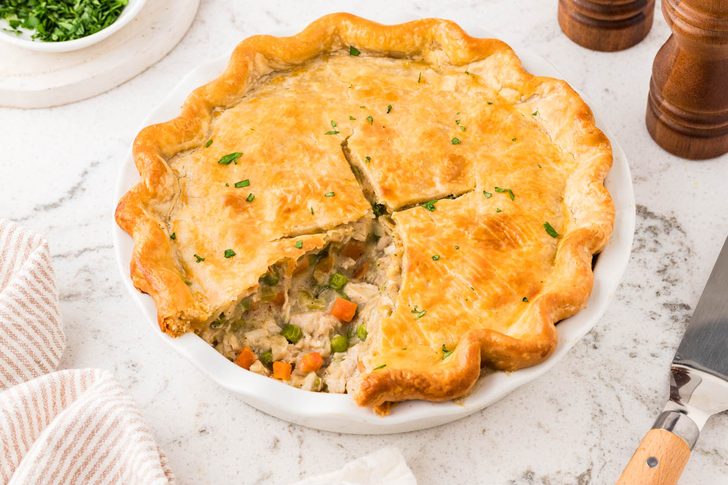
Bake 15 minutes, then loosely tent strips of foil over the outer edge of the crust. The rim is thinner and sits closer to the oven wall, so it browns well ahead of the center. Keep baking another 15 to 25 minutes, until the top is deep golden and you can see filling bubbling up through the vents. Bubbling is the doneness cue that matters. A golden crust over a lukewarm center is a common miss.
10. Rest it
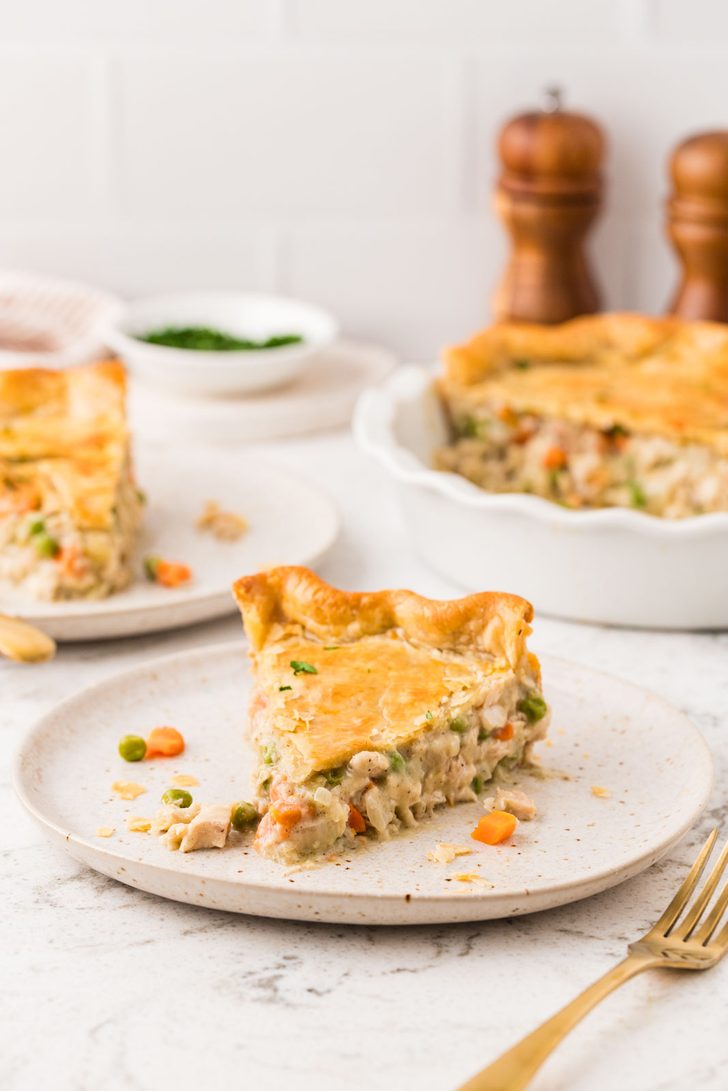
Let the pie sit at least 15 minutes before cutting. I know. The filling is still setting during this time, and cutting early is exactly how you end up serving chicken soup in a bowl of crust. Set a timer and go toss a salad.
Tips for the Best Chicken Pot Pie
- Dice small. Quarter-inch pieces of onion and celery melt into the sauce. Big chunks stay crunchy and stick out.
- Preheat the baking sheet. Slide the rimmed sheet into the oven while it heats and set the pie dish onto the hot pan. That blast of bottom heat helps the bottom crust set fast, which is your best defense against a soggy base.
- Use a glass or ceramic dish. You can watch the bottom crust brown through the side of a glass dish, which takes all the guesswork out.
- Go easy on the filling. Level, not mounded. An overfilled pie leaks no matter how well you crimp.
- Warm your leftovers in the oven, not the microwave, if the crust matters to you.
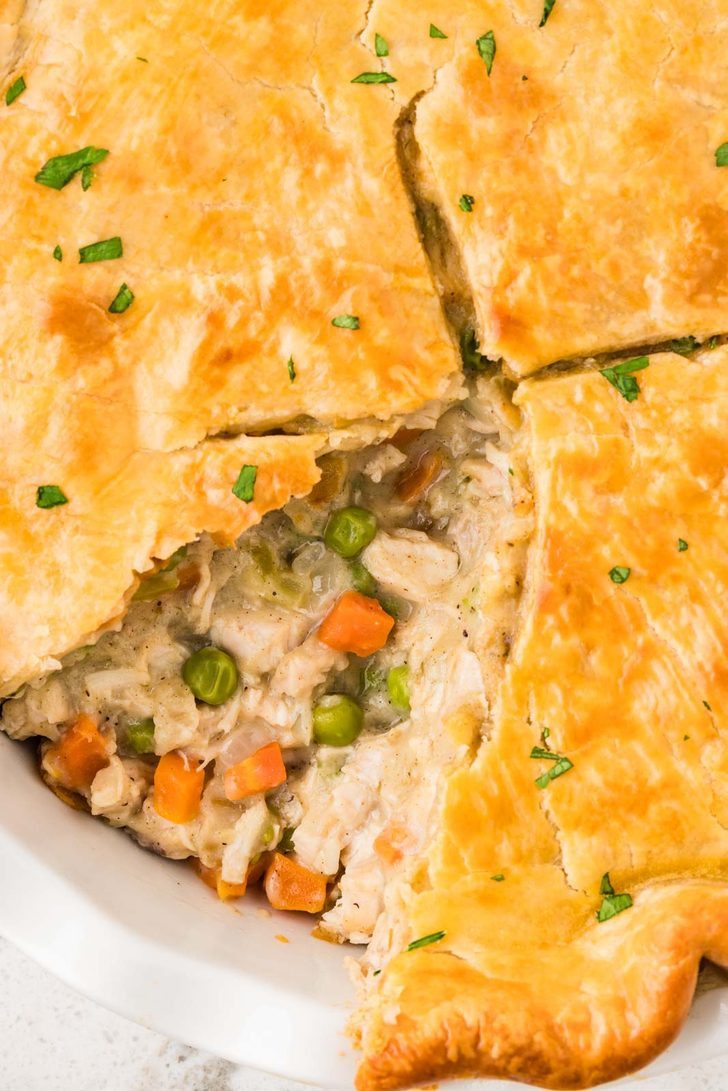
Troubleshooting
My filling is runny. Almost always one of two things. Either the sauce was not simmered long enough before the chicken went in, or the frozen vegetables went in wet. Thaw peas and carrots fully and press them dry in a clean towel. If the finished filling still looks loose in the skillet, simmer it another minute or two before it goes in the crust. And if you have already baked it, give the pie a full 20 minutes of rest instead of 15.
The filling is bland. You did not salt it at the end. Low-sodium broth is deliberately underseasoned, and that is a feature, not a flaw, because it means you control the final number. Taste after the chicken goes in and adjust. A crack of extra black pepper and a small pinch more poultry seasoning also wake it up.
The bottom crust is soggy. Preheat your baking sheet, use a glass or ceramic dish rather than metal, and make sure your filling was properly thick going in. A thin filling soaks into the dough before the crust has a chance to set.
The edge of my crust burned before the pie was done. Get the foil on at the 15 minute mark, not when you notice the color. If your oven runs hot, a pie shield or a full ring of foil from the start is reasonable.
The crust cracked when I unrolled it. It was too cold. Let refrigerated dough sit at room temperature for the time the package specifies. Small cracks can be pinched back together with a damp fingertip.
The filling bubbled out the sides. Either the pie was overfilled or the vents were not big enough. Cut real slits, about an inch long, not pinprick holes.
My sauce is lumpy. The broth went in too fast. Add liquid in a slow stream while stirring constantly. If it has already happened, a whisk and a minute of vigorous effort usually smooths it out.
Variations and Substitutions
- Richer filling: swap the whole milk for heavy cream.
- Add potatoes: stir in a cup of small-diced cooked potatoes with the chicken. Cook them first, they will not soften in the oven.
- Mushrooms: sauté 8 ounces of sliced cremini with the onion and celery for a deeper, earthier filling.
- Turkey pot pie: a straight swap, and one of the best possible uses for Thanksgiving leftovers.
- Herbier: a tablespoon of chopped fresh thyme or parsley stirred in off the heat.
- A splash of white wine: a quarter cup added after the roux, cooked down for a minute before the broth goes in.
Make Ahead, Storage, and Reheating
Make ahead: The filling can be made up to two days in advance and refrigerated in an airtight container. Let it come closer to room temperature before assembling, or add a few minutes to the bake time.
Storing: Do not leave the pie at room temperature for more than 2 hours. Cover it tightly or move individual slices to an airtight container and refrigerate within that window. It will keep 3 to 4 days.
Reheating: A 350°F oven for 15 to 20 minutes, until heated through, gets the crust back to something close to fresh. The microwave works in 30 second bursts if you are in a hurry, but the crust will be soft.
Freezing: Assemble the pie completely, skip the egg wash, wrap it tightly in plastic and then foil, and freeze up to 3 months. Bake from frozen at 425°F, brushing with egg wash first, and add roughly 20 to 30 minutes to the total bake time. Cover the edges with foil early. Check that the center is bubbling before you pull it.
What to Serve With Chicken Pot Pie
Pot pie is rich and it is already carrying starch, protein, and vegetables, so the best partners are sharp and light. A simple green salad with a mustardy vinaigrette. Roasted broccoli or green beans with lemon. Quick-pickled red onions on the side, which sounds odd and works beautifully.
If you are building a week of cozy dinners around it, my Best Homemade Chicken Soup and this roundup of 30 Chicken Casserole Recipes will fill in the rest of the calendar.
Chicken Pot Pie FAQs
Can I use raw chicken instead of rotisserie?
Yes. Cook about a pound of boneless chicken breasts or thighs first, either poached, roasted, or sautéed, then chop or shred to get your two and a half cups. Do not add raw chicken to the filling and count on the oven to cook it, because the bake time is built around a filling that is already hot.
Can I make chicken pot pie with just a top crust?
Absolutely, and it bakes a little faster. Pour the filling into a buttered 9-inch pie dish or a 2-quart baking dish, top with one crust, seal it to the rim, vent, and bake. You will lose the structure that makes clean slices, so plan to serve it by the spoonful.
Why is my chicken pot pie watery?
The two usual culprits are undrained frozen vegetables and a sauce that was not simmered long enough. The filling should be thick and gravy-like in the skillet, not pourable, before it ever touches the crust.
Do I have to cover the crust with foil?
Only if you want an evenly browned pie. The edge browns much faster than the center, so foil at the 15 minute mark is cheap insurance.
Can I use puff pastry instead of pie crust?
Yes, as a top crust. Thaw it, lay it over the filling, seal the edges, vent, and egg wash. Puff pastry does not work well as a bottom crust because it goes soggy under a wet filling.
How do I know when it is done?
Deep golden top and visible bubbling through the vents. Color alone can fool you.
Can I double this recipe?
Make two separate 9-inch pies rather than one large one. A deeper dish changes the bake time in ways that are hard to predict, and the center tends to stay underdone.
Is chicken pot pie better the next day?
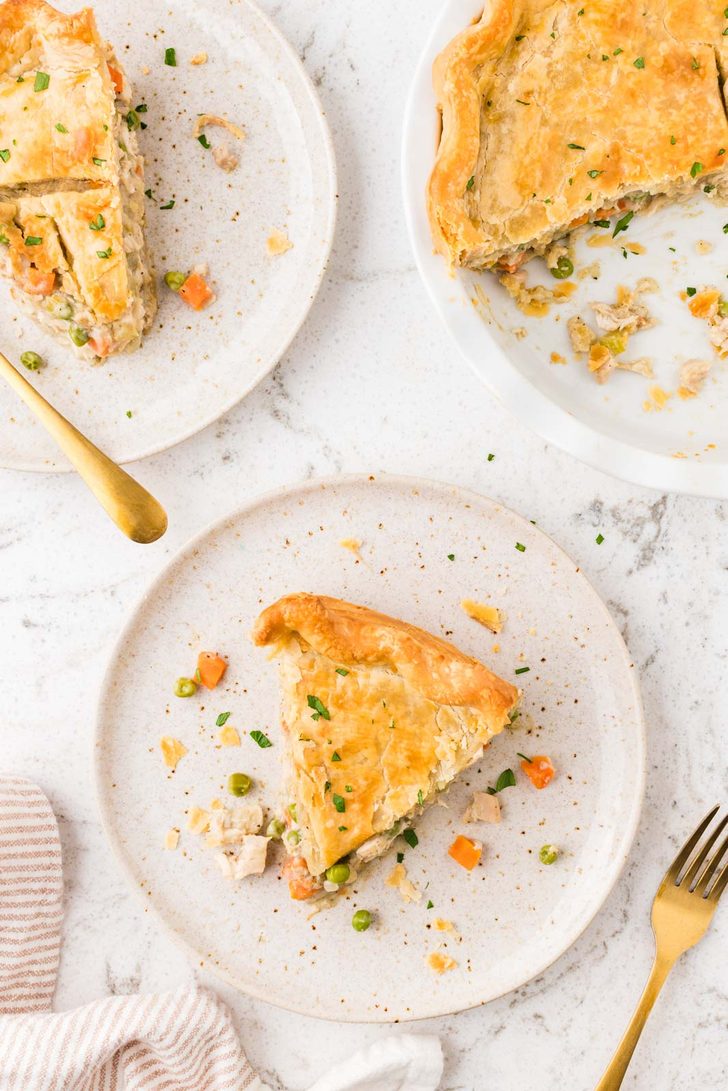
The filling is arguably better, since it is fully set and the seasoning has settled. The crust is not. Reheat in the oven to split the difference.
Love this recipe? Please leave a 5-star ⭐️⭐️⭐️⭐️⭐️ rating in the recipe card below ⬇️ and/or a review in the comment section further down.
Hungry for more? Follow Suburban Simplicity on Facebook, Instagram, YouTube, and Pinterest to see more DIYs, recipes, and home tips!
Also, don’t forget to sign up for email!
I only send one email a week, and it’ll include my latest recipes, DIYs, and tips, information about exclusive “email only” giveaways, and more! See form below!
Want to subscribe to the Suburban Simplicity Recipe Club? It’s only $5 per month, and you’ll get ad-free PDFs of any new recipes that I post while supporting me at the same time! Join the club, here.
Chicken Pot Pie Recipe
Ingredients
- 1 14.1-ounce package refrigerated pie crusts, 2 crusts
- 5 tablespoons unsalted butter
- ½ cup finely diced yellow onion
- ½ cup diced celery
- ⅓ cup all-purpose flour
- 1 teaspoon poultry seasoning
- ½ teaspoon garlic powder
- ½ teaspoon kosher salt, plus more to taste
- ½ teaspoon ground black pepper
- 1¾ cups low-sodium chicken broth
- ½ cup whole milk
- 2½ cups chopped or shredded rotisserie chicken
- 1½ cups frozen peas and carrots, thawed and drained
- 1 large egg
- 1 tablespoon water

Instructions
- Preheat the oven to 425°F. Allow the (1) 14.1-ounce package refrigerated pie crusts to soften according to the package directions while you make the filling.
- Melt 5 tablespoons unsalted butter in a large skillet over medium heat. Add ½ cup finely diced yellow onion and ½ cup diced celery. Cook for 4 to 5 minutes, stirring occasionally, until the vegetables are softened.
- Sprinkle ⅓ cup all-purpose flour, 1 teaspoon poultry seasoning, ½ teaspoon garlic powder, ½ teaspoon kosher salt, and ½ teaspoon ground black pepper over the vegetables. Cook for 1 minute, stirring constantly, until the flour has absorbed the butter and evenly coats the vegetables. Do not let the flour brown.
- Slowly pour in 1¾ cups low-sodium chicken broth, whisking or stirring constantly to keep the sauce smooth. Stir in ½ cup whole milk. Bring the mixture to a gentle simmer and cook for 3 to 5 minutes, stirring frequently, until the sauce is thick and creamy enough to coat the back of a spoon.
- Stir in 2½ cups rotisserie chicken and 1½ cups thawed and drained frozen peas and carrots. Cook for 2 to 3 minutes, stirring occasionally, just until everything is heated through. Remove the skillet from the heat. Taste the filling and add additional kosher salt if needed. Let the filling stand for about 5 minutes while you prepare the crust.
- Unroll 1 refrigerated pie crust and gently fit it into a 9-inch pie dish, pressing it against the bottom and sides without stretching the dough. Place the pie dish on a rimmed baking sheet, then spoon the chicken filling evenly into the crust.
- Place the remaining refrigerated pie crust over the filling. Fold the edge of the top crust under the edge of the bottom crust and press or crimp the edges together to seal. Cut 4 to 5 small slits in the center of the top crust to allow steam to escape.
- Whisk 1 large egg with 1 tablespoon water in a small bowl until blended. Lightly brush the egg wash over the top crust using a pastry brush.
- Bake for 15 minutes, then loosely cover the outer edge of the crust with foil strips to prevent overbrowning. Continue baking for 15 to 25 minutes, until the crust is golden brown and the filling is bubbling through the vents.
- Let the chicken pot pie rest for at least 15 minutes before slicing. The filling will continue to thicken as it rests, making the pie much easier to serve. Serve warm and ENJOY!
Notes
- The filling should be thick and gravy-like before it goes into the crust. If it still looks thin, simmer it for another minute or two before adding the chicken and vegetables.
- Thaw and drain the frozen peas and carrots well so they do not add unnecessary water to the creamy filling.
- Whole milk gives the filling a creamy texture without making it overly rich. You can substitute heavy cream for a richer sauce.
- Rotisserie chicken and chicken broth can vary quite a bit in saltiness, so taste the finished filling before adding any additional salt.
- Let the pie rest for the full 15 minutes after baking so the filling has time to set, instead of running out when you cut the first slice.