

Easy Yeast Rolls (Soft & Fluffy, Ready in 2 Hours)
These easy yeast rolls are soft, buttery pull-apart dinner rolls made from one simple dough: flour, whole milk, butter, an egg, a little sugar, and rapid-rise yeast. You mix the dough in a stand mixer, let it rest for 10 minutes, shape 12 rolls, and give them one rise. Start to finish takes 1 hour 55 minutes, and most of that is hands-off.
If yeast has ever made you nervous, this is the recipe to get your feet wet. The dough comes together in about 7 minutes of mixing, there is no long first rise to babysit, and the rolls tell you when they are ready by how they look, not by what the clock says. Below you will find every step, plus answers to the questions that come up most, so you can skip the guessing and just bake.
As much trouble as I take with family dinners, I’ll tell you that my kids will skip everything else and only eat these rolls.
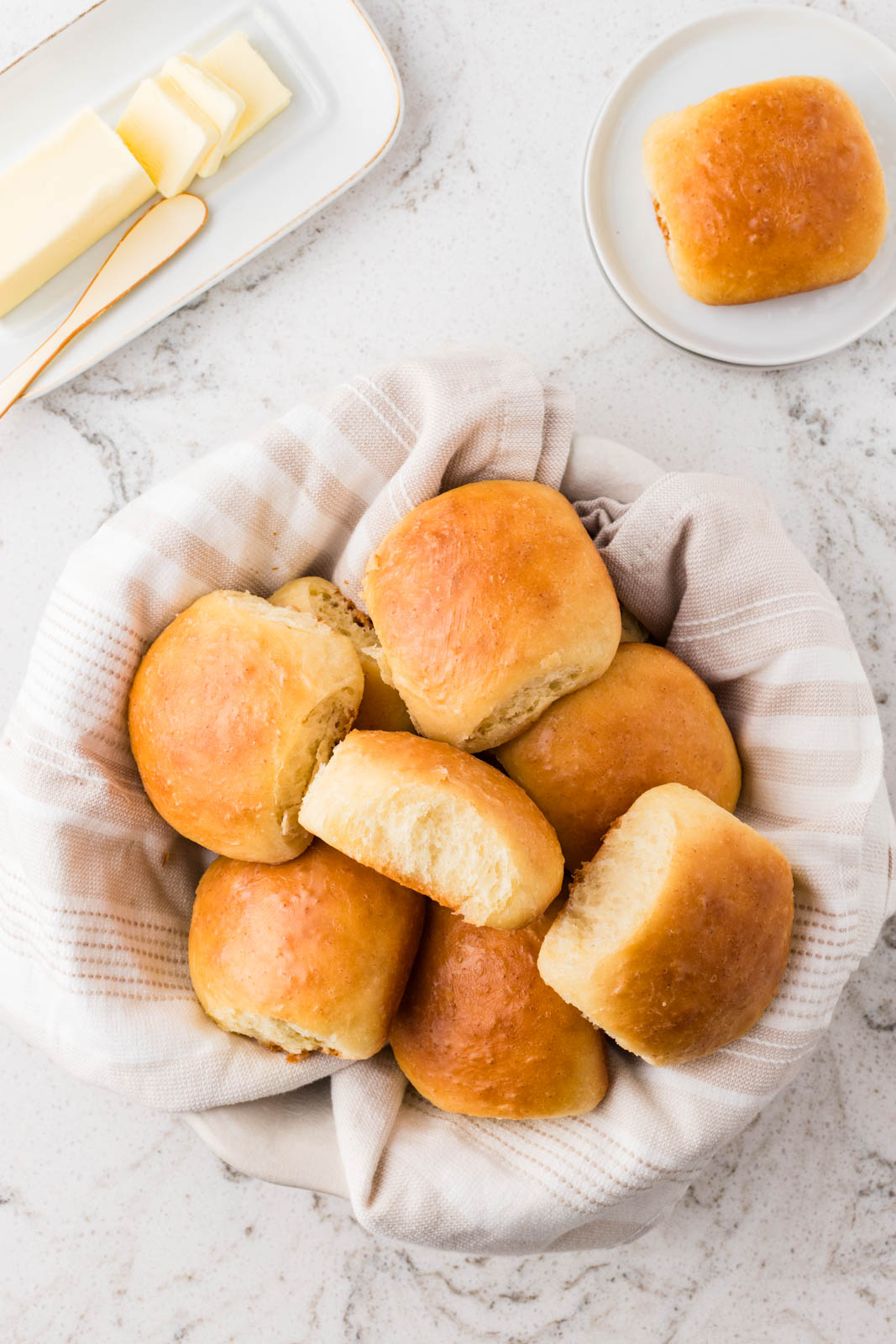
Easy Yeast Rolls at a Glance
- Makes: 12 soft dinner rolls in a 9×13-inch baking dish
- Total time: 1 hour 55 minutes (20 minutes prep, 10 minutes rest, 60 minutes rise, 25 minutes bake)
- Yeast: rapid-rise instant yeast, mixed right into the flour
- Oven temperature: 350°F
- Done when: golden brown and 190°F to 195°F in the center of a middle roll
- Make ahead: bake the same day, then store 3 days at room temperature or freeze for up to 3 months
Why You’ll Love These Easy Yeast Rolls
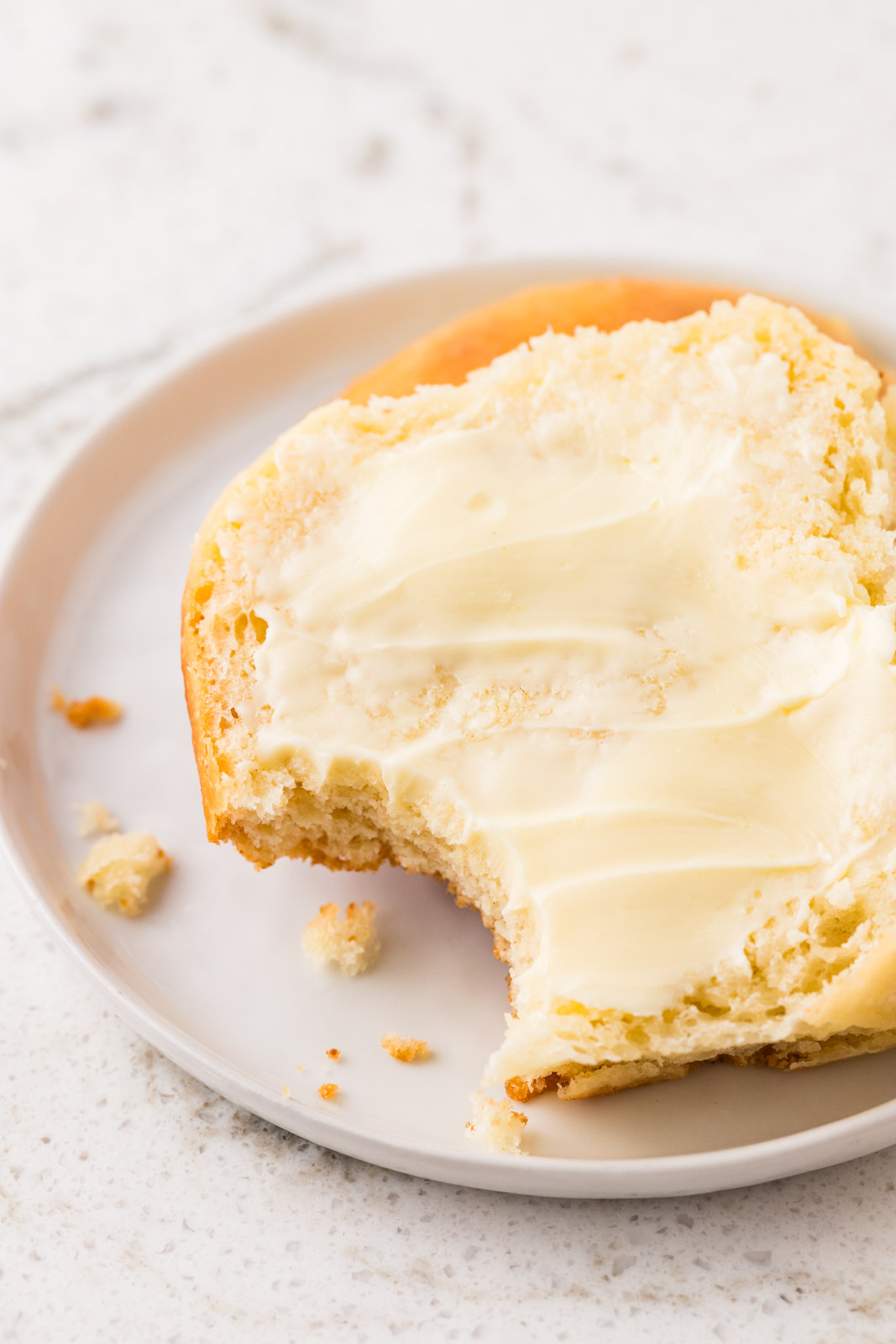
- They are genuinely soft. Whole milk, butter, and an egg give you a tender crumb that stays soft long after the rolls cool.
- One rise, no fuss. Rapid-rise yeast means a short 10-minute rest, then shaping, then a single rise of 30 to 60 minutes.
- Simple, everyday ingredients. If you have flour, milk, butter, an egg, sugar, salt, and yeast, you can make these tonight.
- Easy to get right. You will know the dough is ready by how it feels, you will know the rolls are ready to bake by how they look, and a thermometer tells you when they are done.
- Perfect for a crowd. Twelve rolls in one pan, brushed with butter while they are still hot from the oven.
- They freeze well. Bake a batch now and pull rolls out of the freezer whenever dinner needs a little something extra.
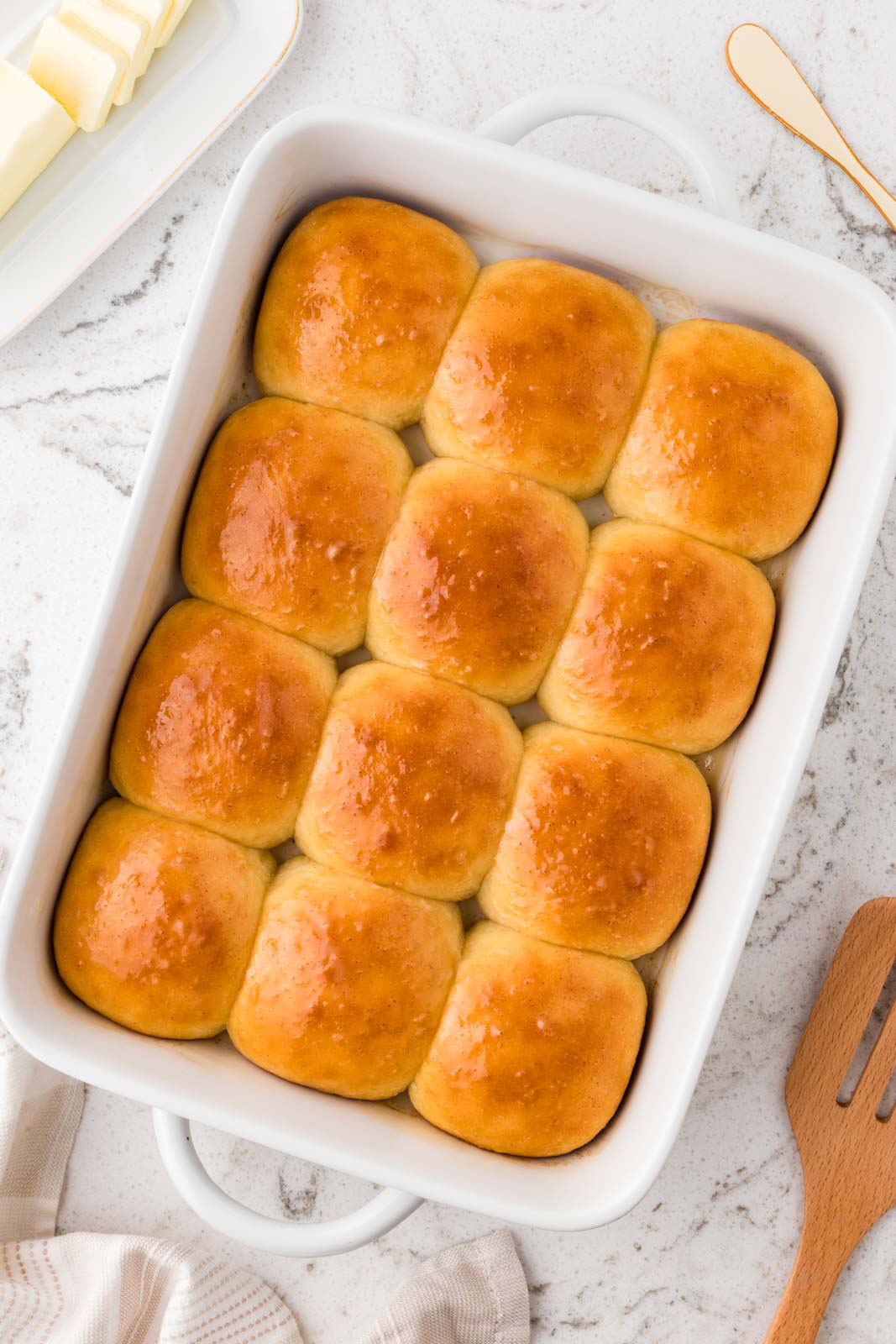
What You Need to Make Easy Yeast Rolls
The full measurements are in the recipe card below. Here is what each ingredient does and what you can swap.
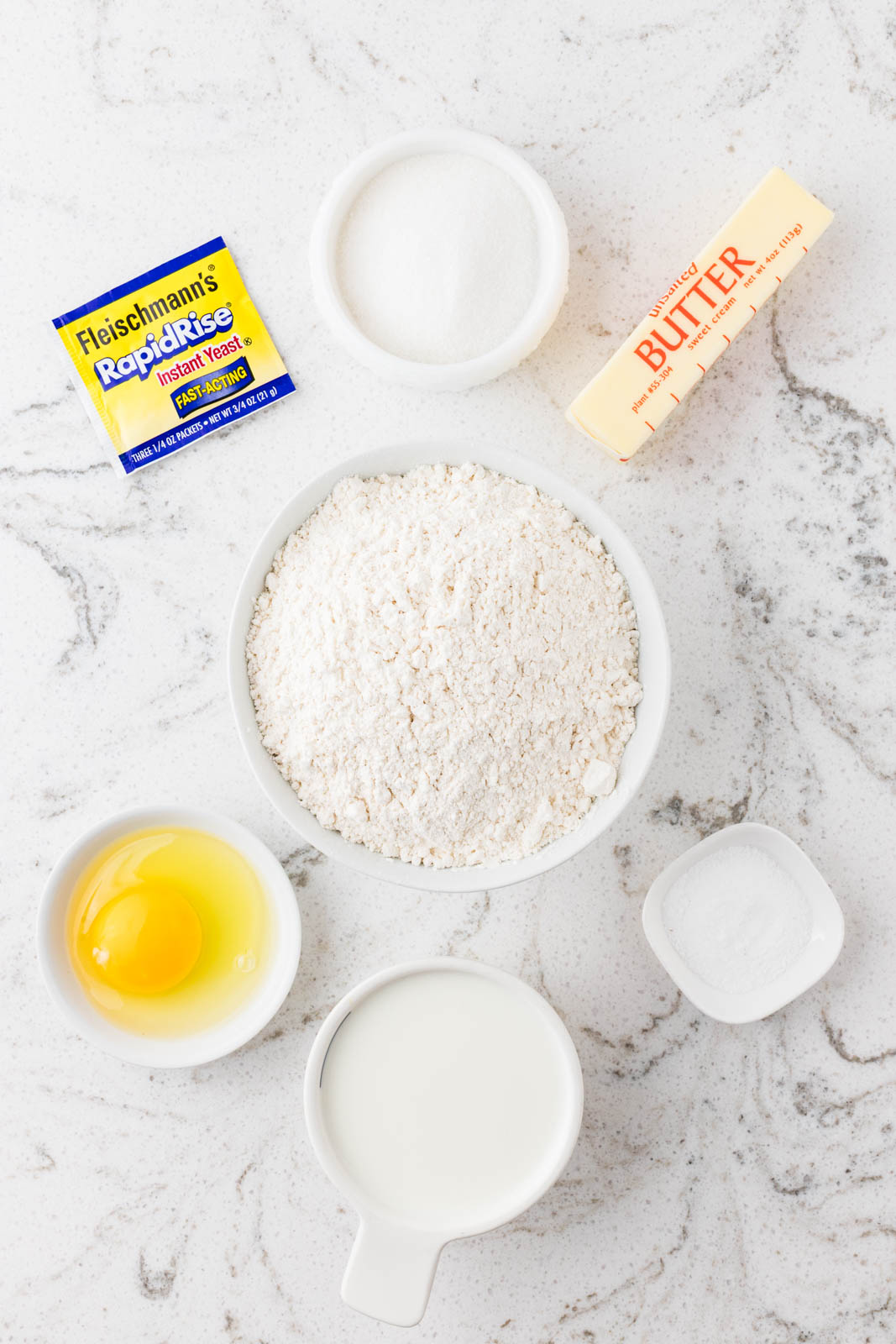
- All-purpose flour: This gives the rolls structure while keeping the crumb soft. Weigh it if you can (390 grams for 3¼ cups). If you are using measuring cups, spoon the flour into the cup and level it off instead of scooping straight from the bag, which packs in extra flour and makes dense rolls.
- Granulated sugar: Just 3 tablespoons. It adds a hint of sweetness, helps the tops brown, and keeps the rolls tender.
- Rapid-rise instant yeast: One standard ¼-ounce packet is 2¼ teaspoons. Because it goes straight into the dry ingredients, the dough only needs a short rest and one main rise.
- Fine salt: Salt is flavor, but it also strengthens the dough. Don’t skip it.
- Whole milk: This is what gives the rolls their flavor and tenderness. You can use 2% milk, but the rolls will be a little less rich.
- Unsalted butter: Seven tablespoons in total. Four go into the dough, one greases the pan, and two get brushed over the hot rolls. Salted butter works too, but you may want to cut back on the added salt slightly.
- Egg: One large egg at room temperature adds richness, structure, and color. I do not recommend leaving it out of this recipe.
Tools That Make These Rolls Easier
You can make this recipe with basic kitchen gear, but a few tools take the guesswork out. The two that matter most are the kitchen scale and the instant-read thermometer.
- Kitchen scale
- Instant-read thermometer
- Stand mixer with dough hook
- 9×13-inch baking dish
- Measuring cup (microwave-safe, for warming the milk)
- Silicone spatula
- Bench scraper
- Pastry brush
- Plastic wrap or a clean kitchen towel
- Cooling rack
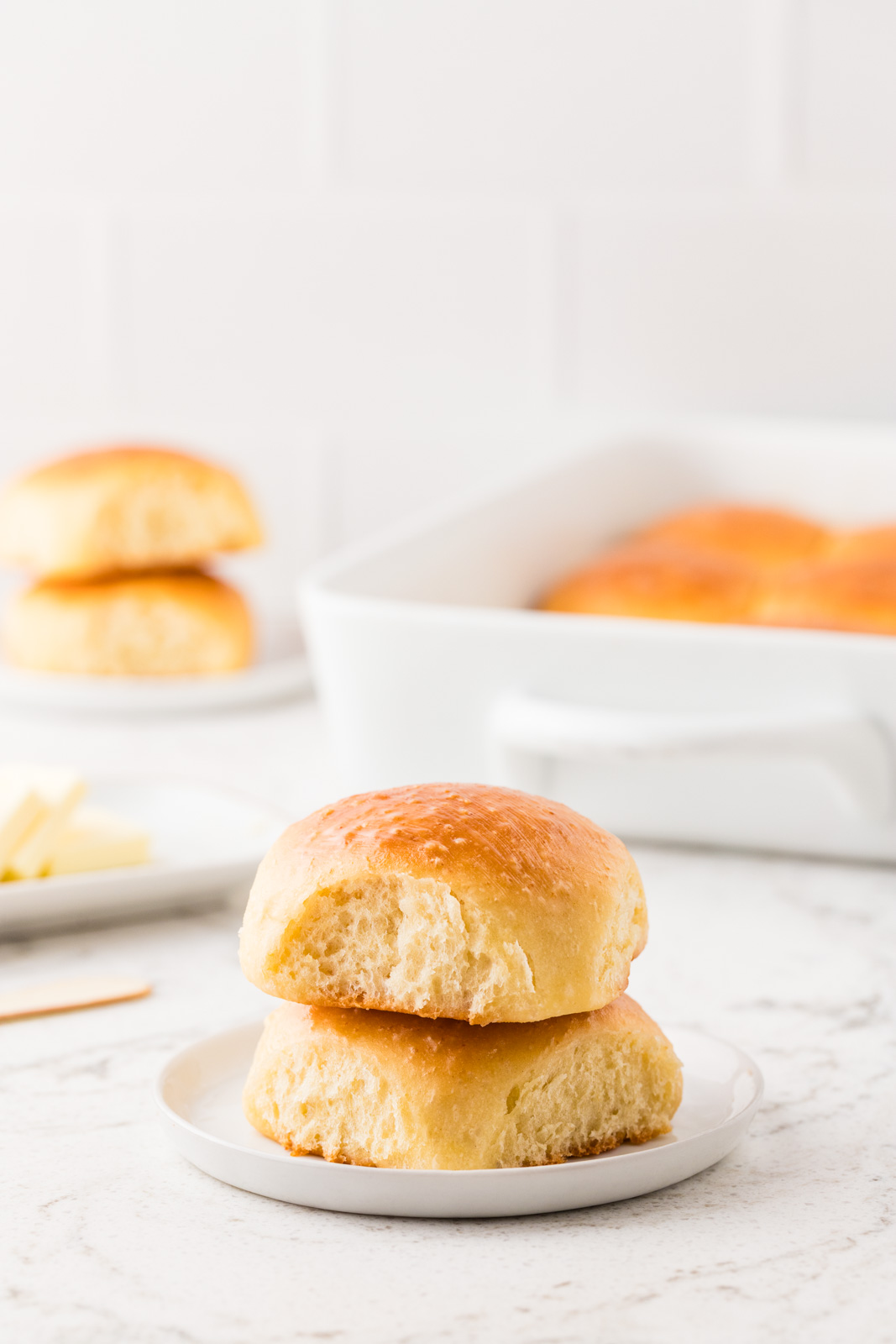
How to Make Easy Yeast Rolls
This is the short tour. The printable recipe card below has the exact amounts.
1. Mix the dry ingredients
Add the flour, sugar, yeast, and salt to the bowl of your stand mixer and whisk for a few seconds so everything is evenly spread out. Because the yeast goes in dry, this quick whisk matters.
2. Warm the milk and butter
Cut 4 tablespoons of the butter into small cubes and drop them into the cup of milk. Microwave until the mixture hits 120°F to 130°F. Use an instant-read thermometer here. Milk that is too hot can kill the yeast, and milk that is too cool slows everything down. The butter does not need to melt all the way.
3. Make the dough
Pour the warm milk mixture into the flour mixture, add the egg, and mix with the dough hook on low for about 1 minute. Scrape down the bowl if you need to. You are looking for a shaggy, rough-looking dough, and that is exactly right at this stage.
4. Knead until soft and slightly tacky
Turn the mixer up to medium-low and knead for 5 to 6 minutes. The dough should look smooth and feel elastic, but still soft and a little tacky. It may cling to the bottom of the bowl, and that is fine.
If the dough is truly wet and hard to handle after kneading, add more flour 1 tablespoon at a time. Try not to add more than 2 tablespoons total. Extra flour is the number one reason rolls turn out heavy and dry.
5. Let the dough rest
Cover the bowl and let the dough rest for 10 minutes. This short break makes the dough easier to shape.
6. Grease the pan
Soften 1 tablespoon of the butter and use it to grease the bottom and sides of a 9×13-inch baking dish.
7. Divide and shape the rolls
Divide the dough into 12 equal pieces. For even rolls, weigh the whole piece of dough and divide that number by 12. To shape each one, pull the edges underneath and gently roll the dough against the counter with a cupped hand until the top is smooth and round.
8. Arrange and let the rolls rise
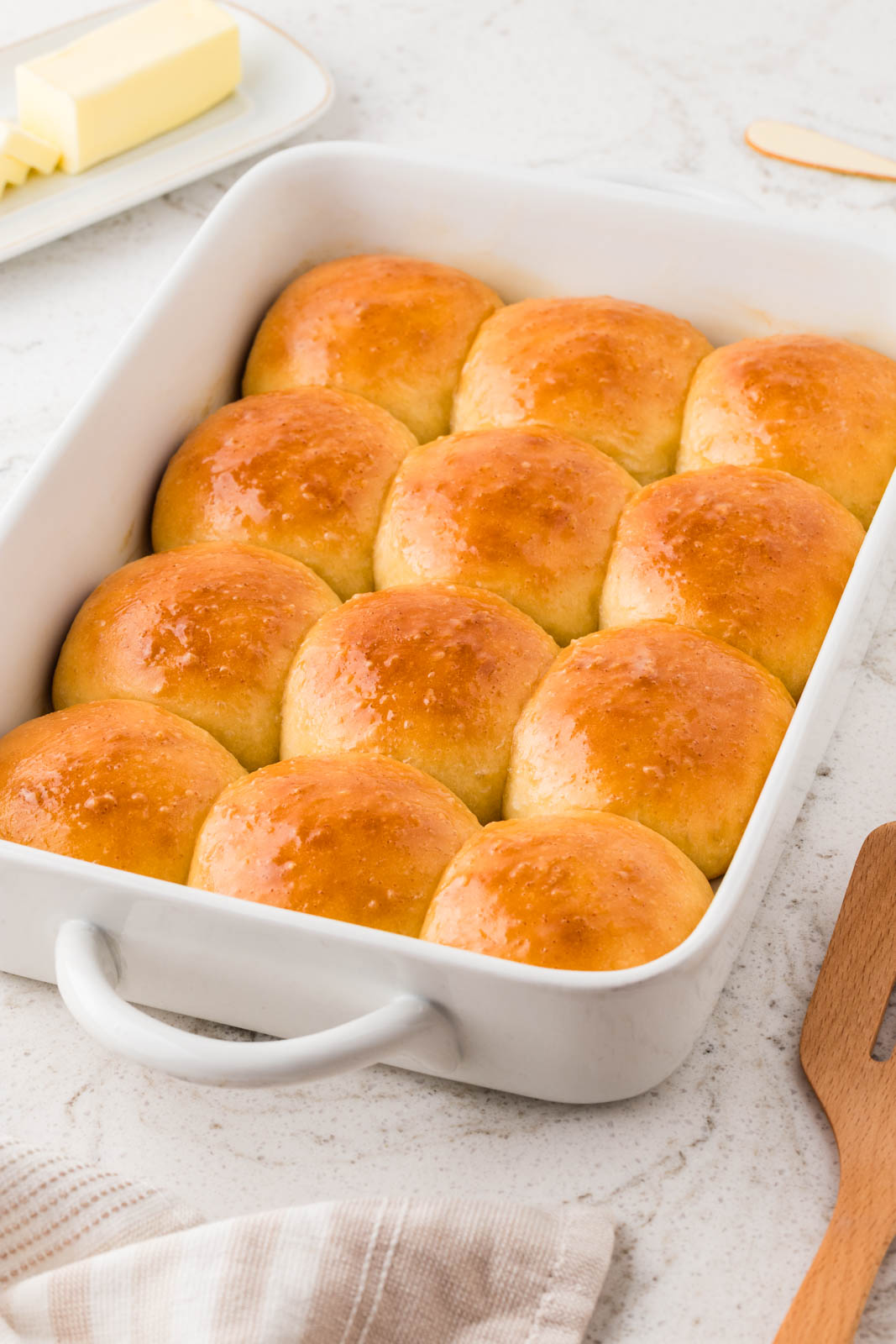
Set the 12 rolls in the pan in 3 rows of 4. Cover loosely with plastic wrap or a clean towel and let them rise in a warm spot, away from drafts, for 30 to 60 minutes. Go by looks, not the clock. The rolls are ready when they are very puffy and touching, or nearly touching, one another.
9. Preheat the oven
During the last 20 minutes of rising, heat the oven to 350°F.
10. Bake until golden
Bake for 20 to 25 minutes, until the tops are evenly golden brown. For a foolproof check, slide an instant-read thermometer into the center of a middle roll. It should read 190°F to 195°F.
11. Brush with butter and serve warm
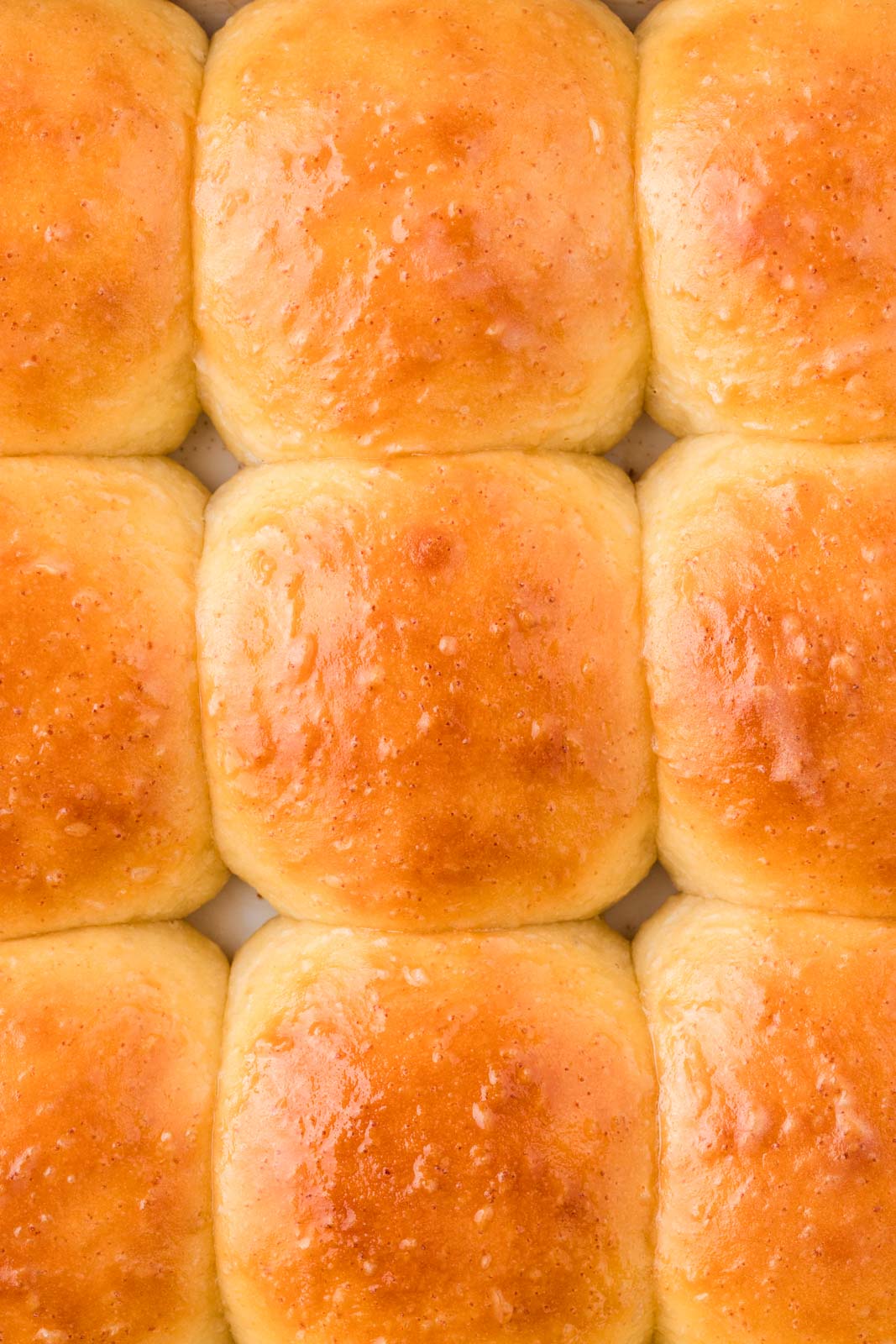
Melt the last 2 tablespoons of butter and brush it over the tops the second the rolls come out of the oven. Let them cool in the pan for about 10 minutes, then pull them apart and serve warm.
Tips for the Softest Yeast Rolls
A few small habits make the difference between good rolls and the kind people ask you to bring every holiday.
- Weigh your flour. 390 grams is the most reliable measurement. If you use cups, spoon and level.
- Use a thermometer for the milk. 120°F to 130°F is the sweet spot for rapid-rise yeast mixed into the dry ingredients.
- Resist the urge to add flour. Soft and slightly tacky is the goal. Some dough sticking to the bottom of the mixer bowl is normal.
- Watch the rolls, not the clock. Rising time depends on how warm your kitchen is. Bake when the rolls look puffy and are touching.
- Check the center. A middle roll at 190°F to 195°F means the center is baked through.
- Butter them hot. Brushing the rolls the moment they leave the oven helps the butter soak into the tops and keeps them soft.
- Start with whole milk and a room-temperature egg. Both help the dough come together smoothly and give the best flavor.
Easy Yeast Rolls Troubleshooting
Why are my yeast rolls dense?
The most common cause is too much flour. Weigh it, stop adding extra once the dough is soft and slightly tacky, and give the rolls enough time to puff up before baking. Rolls that go into the oven before they are properly risen tend to bake up tight and heavy.
Why didn’t my dough rise?
Check two things first: the date on your yeast and the temperature of your milk. Old yeast loses power, milk that is too hot can kill it, and milk that is too cool slows it down. Also make sure the rolls are rising somewhere warm and free of drafts. If everything checks out, give them extra time and keep watching for that puffy, touching look.
Why are my rolls dry?
Too much flour or too much time in the oven is the usual culprit. Pull the rolls when they are golden and a middle roll reads 190°F to 195°F, then brush them with butter right away.
Why is the middle of my rolls gummy?
They likely needed a little longer in the oven. Use a thermometer in the center of a middle roll and look for 190°F to 195°F before you take the pan out.
Why is my dough so sticky?
This dough is meant to be soft and slightly tacky. If it is genuinely wet and hard to handle after the full kneading time, add flour 1 tablespoon at a time, and try to stay under 2 tablespoons total.
How to Store, Freeze, and Reheat Yeast Rolls
Yeast rolls are best the day they are baked, but they keep well.
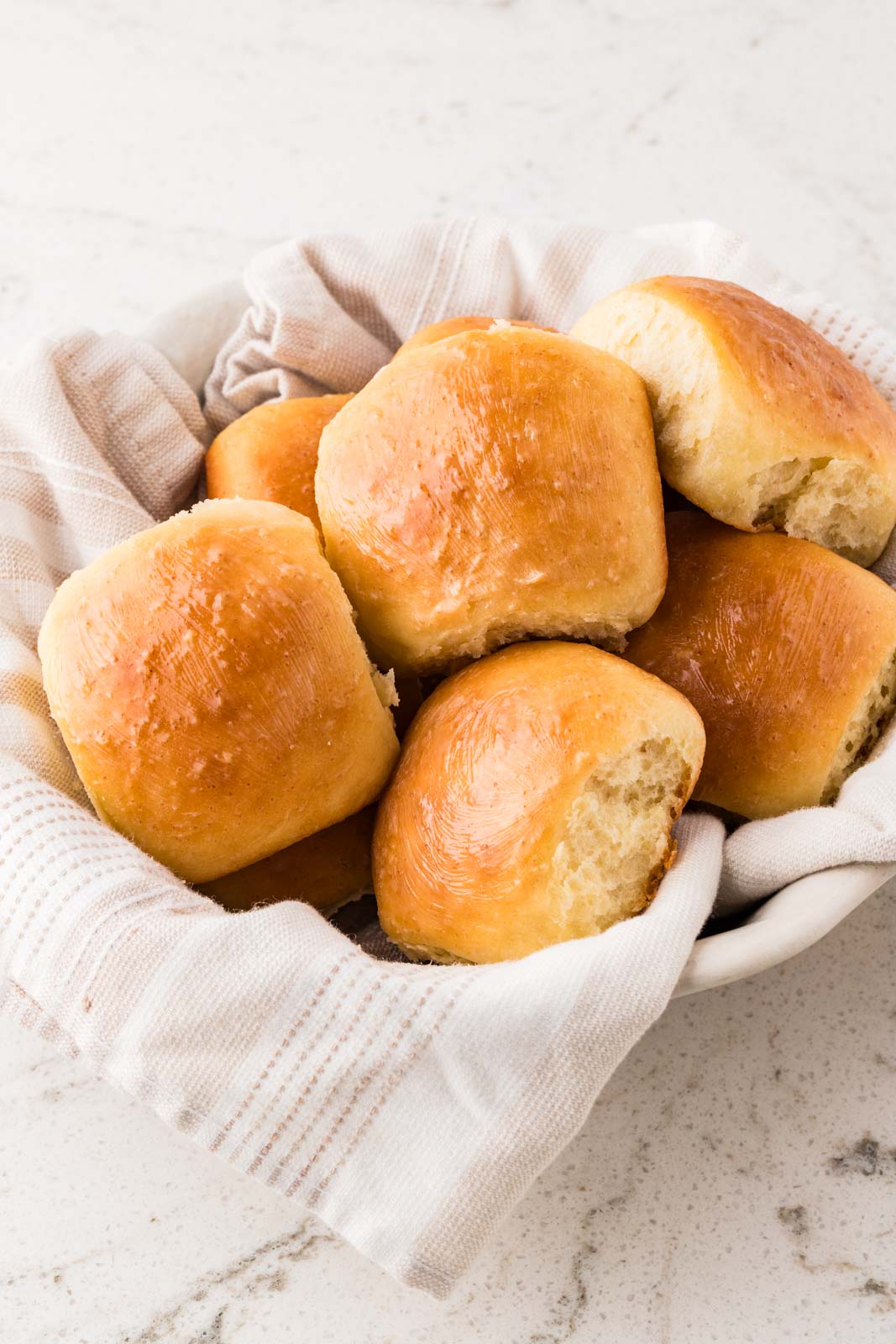
- Room temperature: Let the rolls cool completely, then store them in an airtight container for up to 3 days.
- Refrigerator: Keep them in an airtight container for up to 5 days. The fridge can make bread a little firmer, so warm them up before serving.
- Freezer: Cool the rolls completely, then freeze them in an airtight container or freezer bag for up to 3 months. Thaw at room temperature and warm before serving.
- Reheating: Wrap the rolls in foil and warm them in a 350°F oven for about 10 minutes, or microwave a single roll for 10 to 15 seconds.
Can you make these rolls ahead?
This recipe is built around rapid-rise yeast and a quick rise, so for the best results bake the rolls the same day you make the dough. If you want a true overnight version, use a recipe and yeast designed for a refrigerated rise rather than changing this method.
Easy Yeast Rolls FAQs
What makes yeast rolls soft?
Whole milk, butter, and an egg make the dough rich and tender, and not over-flouring keeps the crumb light. Baking just until a middle roll hits 190°F to 195°F, then brushing the tops with butter right away, keeps them soft after they cool.
Do yeast rolls need to rise twice?
Not in this recipe. The dough gets a short 10-minute rest after kneading, then you shape the rolls and let them rise once in the pan for 30 to 60 minutes before baking.
What kind of yeast should I use?
This recipe is made with rapid-rise instant yeast, which goes straight into the dry ingredients. One standard ¼-ounce packet is 2¼ teaspoons. Active dry yeast needs a longer rise and is usually dissolved in warm liquid first, so it changes the method.
What temperature should the milk be?
Heat the milk and butter to 120°F to 130°F. That range works for instant yeast mixed into the dry ingredients. Use an instant-read thermometer so you don’t overheat it.
Can I use water instead of milk?
Milk gives the rolls more flavor and tenderness than water, so I recommend whole milk. If you only have 2% milk, it works, though the rolls will be slightly less rich.
Can I use salted butter?
Yes. You may want to cut back slightly on the salt in the dough, since salted butter adds some of its own.
Can I leave out the egg?
I don’t recommend it. The egg adds richness, structure, and color to these rolls.
Can I use bread flour?
All-purpose flour gives the softest, most tender crumb, and that is what this recipe is written for. Bread flour will give a chewier roll.
Can I make the dough without a stand mixer?
This recipe was written for a stand mixer. If you knead by hand, work the dough on a lightly floured surface until it is smooth and elastic, and stop when it is soft and slightly tacky. Hand kneading usually takes a bit longer than machine kneading.
How do I know when the rolls have risen enough?
Look for rolls that are very puffy, pillowy, and touching or nearly touching one another. That visual cue is more reliable than a set time.
How do I know when the rolls are done?
They should be evenly golden brown, and an instant-read thermometer in the center of a middle roll should read 190°F to 195°F.
What size pan do I need?
A 9×13-inch baking dish. Arrange the 12 rolls in 3 rows of 4 so they rise up and bake into soft, pull-apart sides.
Should I butter the rolls before or after baking?
After. Brush melted butter over the tops as soon as the rolls come out of the oven.
How many rolls does this recipe make?
12 rolls, with one roll per serving.
What to Serve with Easy Yeast Rolls
These rolls fit almost anywhere you would put a bread basket. A few of my favorite places for them:
- Next to a big pan of Chicken Pot Pie, to mop up every bit of the creamy filling
- Alongside Chicken and Sausage Jambalaya for a Southern-style supper
- With soup, stew, or chili on a cold night (maybe next to this Slow Cooker Tomato Basil Soup)
- On the holiday table with your turkey, ham, or roast
- Split and filled with leftover turkey or ham for small sandwiches the next day
Do you love this recipe? Please leave a 5 star ⭐️⭐️⭐️⭐️⭐️ rating in the recipe card below ⬇️ and/or a review in the comment section further down.
Hungry for more? Follow Suburban Simplicity on Facebook, Instagram, YouTube, and Pinterest to see more DIYs, recipes, and home tips!
Also, don’t forget to sign up for email!
I only send one email a week, and it’ll include my latest recipes, DIYs, and tips, information about exclusive “email only” giveaways, and more! See form below!
Want to subscribe to the Suburban Simplicity Recipe Club? It’s only $5 per month, and you’ll get ad-free PDFs of any new recipes that I post while supporting me at the same time! Join the club, here.
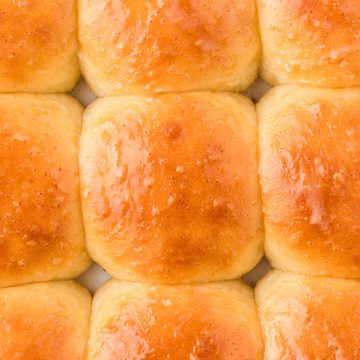
Easy Yeast Rolls
Ingredients
- 3¼ cups 390 grams all-purpose flour, plus up to 2 tablespoons more
- 3 tablespoons granulated sugar
- 1 ¼-ounce packet rapid-rise instant yeast
- 1¼ teaspoons fine salt
- 1 cup whole milk
- 7 tablespoons unsalted butter, divided
- 1 large egg, room temperature

Equipment
- measuring cup
- thermometer
- mixing bowl
Instructions
- Add 3¼ cups (390 grams) all-purpose flour, 3 tablespoons granulated sugar, (1) ¼-ounce packet rapid-rise instant yeast, and 1¼ teaspoons fine salt to the bowl of a stand mixer. Whisk briefly to distribute the ingredients evenly.
- Cut 4 tablespoons of the unsalted butter into small cubes and add it to 1 cup whole milk in a microwave-safe measuring cup. Heat until the mixture reaches 120°F to 130°F. The butter does not need to melt completely.
- Pour the warm milk mixture into the flour mixture and add 1 large room-temperature egg. Mix with the dough hook on low speed for about 1 minute, scraping down the bowl if necessary, until a shaggy dough forms.
- Increase the mixer to medium-low speed and knead for 5 to 6 minutes. The finished dough should become smooth and elastic but remain soft and slightly tacky. It may still cling slightly to the bottom of the mixer bowl. If the dough is genuinely wet and difficult to handle after kneading, add additional all-purpose flour 1 tablespoon at a time, using no more than 2 tablespoons unless absolutely necessary.
- Cover the dough and let it rest for 10 minutes.
- Soften 1 tablespoon of the unsalted butter, then use it to grease the bottom and sides of a 9×13-inch baking dish.
- Divide the dough into 12 equal pieces. Pull the edges of each piece underneath and gently roll against the work surface with a cupped hand until the top is smooth and round.
- Arrange the 12 dough balls evenly in the prepared 9×13-inch baking dish in 3 rows of 4. Cover loosely with plastic wrap or a clean kitchen towel and let rise in a warm, draft-free place for 30 to 60 minutes, or until the rolls are very puffy and touching or nearly touching one another.
- During the final 20 minutes of rising, preheat the oven to 350°F.
- Bake the rolls at 350°F for 20 to 25 minutes, or until evenly golden brown. An instant-read thermometer inserted into the center of a middle roll should register 190°F to 195°F.
- Melt your remaining 2 tablespoons unsalted butter. Remove the rolls from the oven and immediately brush the melted butter evenly over the tops. Let the rolls cool in the baking dish for about 10 minutes, then serve warm. ENJOY!
Notes
- The dough should be soft and slightly tacky. Don’t keep adding flour just because some dough clings to the bottom of the mixer bowl. Too much flour can make the finished rolls heavier and drier.
- Use the appearance of the rolls rather than the clock to determine when they are ready to bake. Properly proofed rolls should look noticeably swollen and pillowy and should be touching or nearly touching one another.
- Heating the milk to 120°F to 130°F is an important step when using rapid-rise instant yeast mixed directly into the dry ingredients. Use an instant-read thermometer to avoid accidentally overheating the liquid.
- Whole milk gives the rolls more flavor and tenderness than water or lower-fat milk. I recommend whole milk for the best result.
- Checking the center roll for an internal temperature of 190°F to 195°F helps prevent an underbaked or gummy center.