
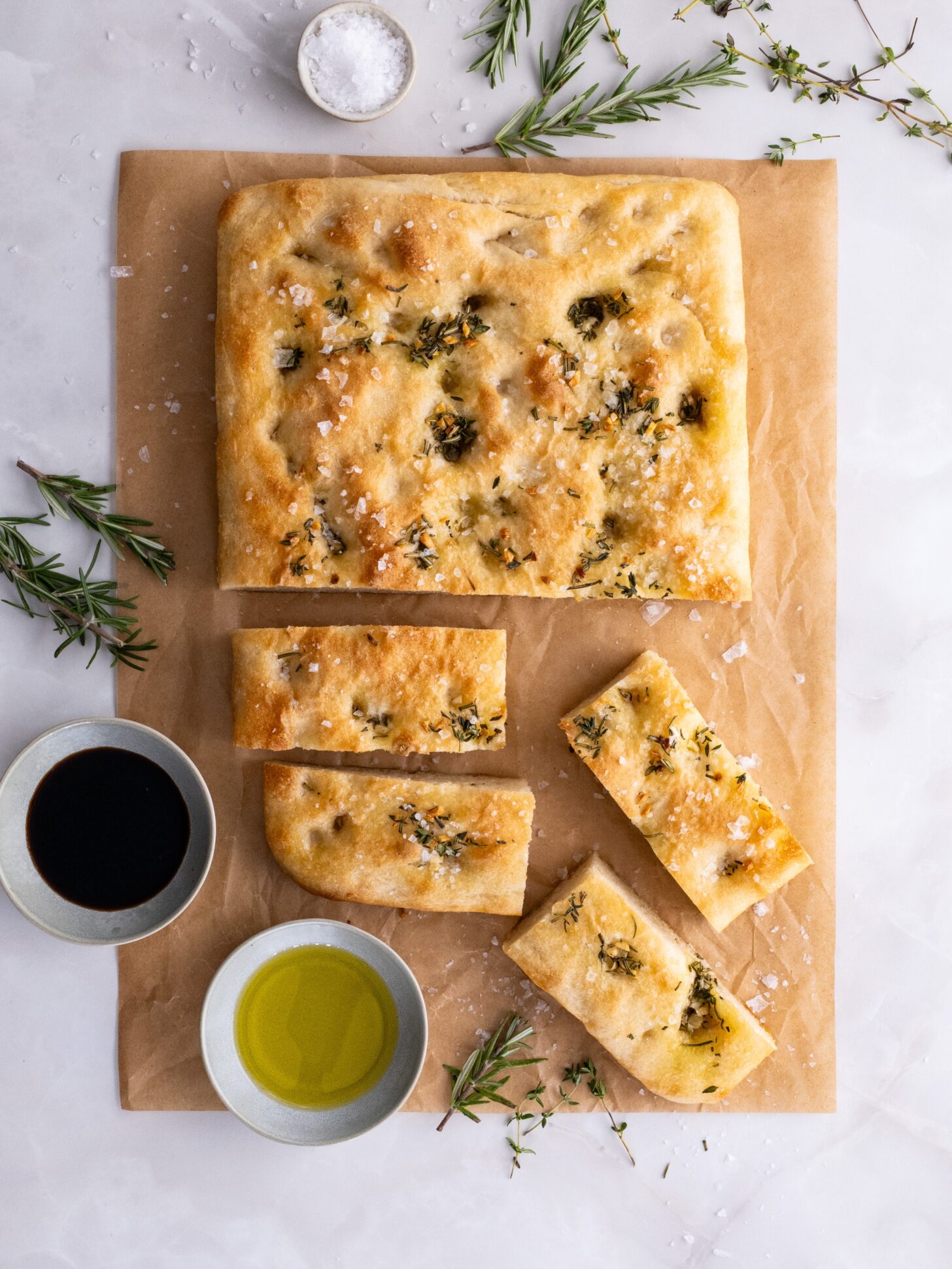
Garlic and Herb Focaccia Bread From Scratch
There are few things better than the smell of freshly baked, yeasty bread filling your kitchen. This garlic and herb focaccia bread recipe is approachable for new bread bakers, and consistent enough for experienced bakers to come back to over and over again! It is the bread you tear into with your hands, dip into olive oil, and snack on straight from the pan while it is still warm.
This freshly baked homemade focaccia bread is perfect served with Crock Pot Tomato Basil Soup (made without cream!) or just with a bowl of fresh olive oil and balsamic vinegar.
Watch The How-To Video
What Is Focaccia Bread?
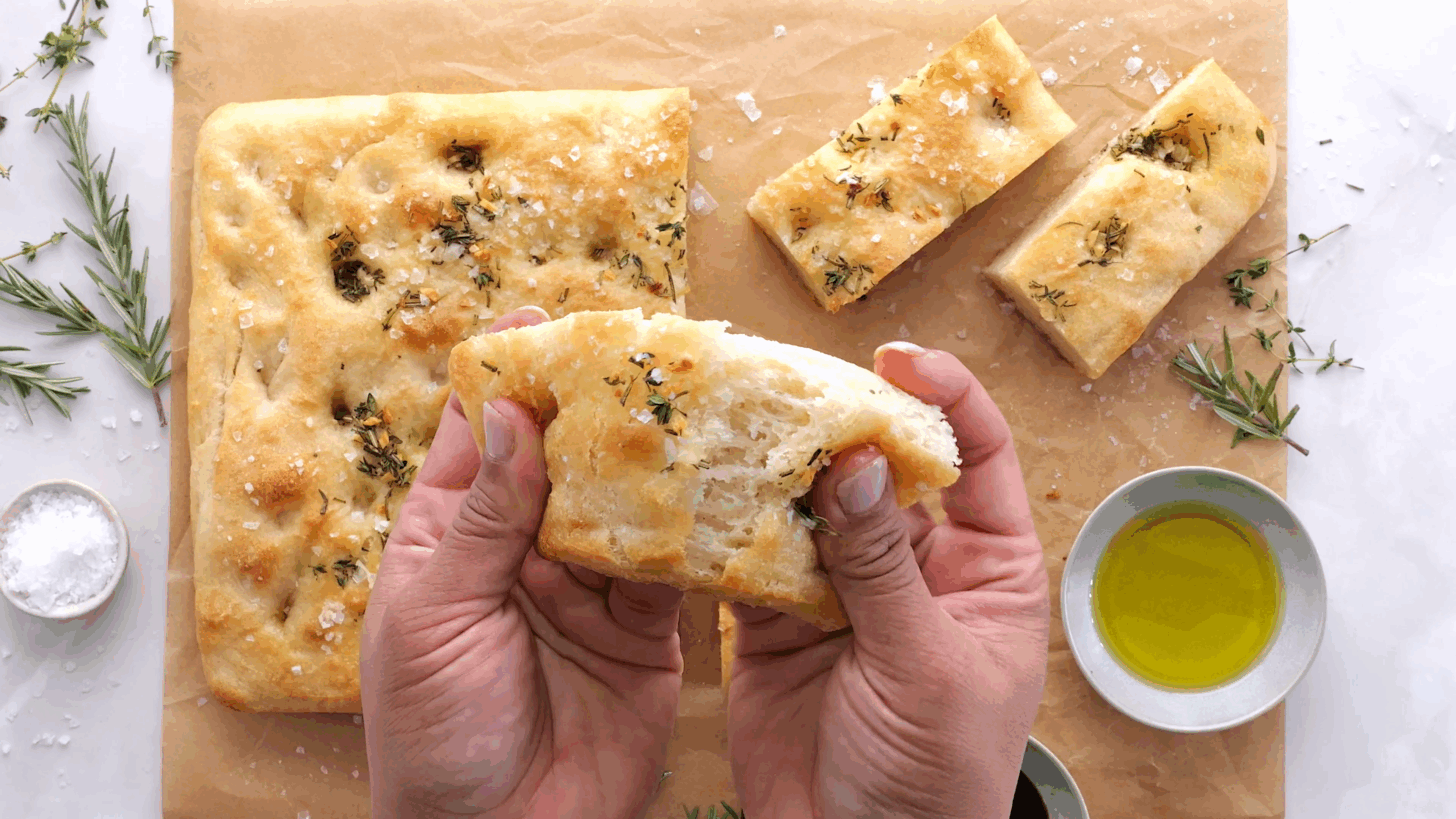
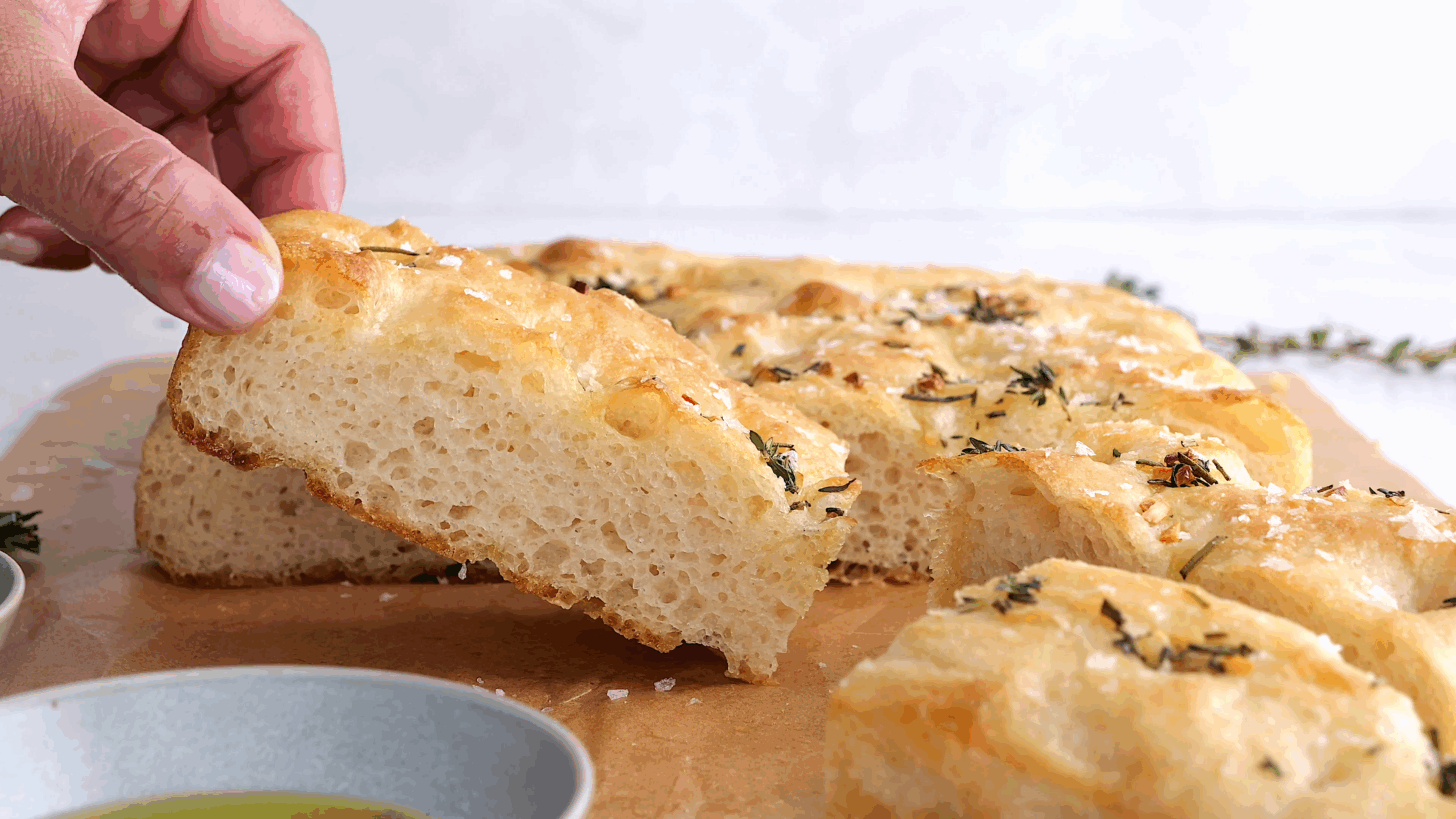
Focaccia bread is an Italian flatbread known for its light, airy crumb and generous use of olive oil. It is baked in a pan rather than shaped like a loaf, which gives it that signature flat, dimpled appearance. Those dimples are not just for looks. They hold pools of olive oil and flavor, helping the bread stay moist and tender while baking.
Unlike crusty artisan loaves, focaccia bread is meant to be soft and pillowy inside with a lightly crisp exterior. It is rich without being heavy and flavorful without needing butter or complicated techniques.
One of the defining characteristics of focaccia bread is how forgiving it is. The dough is typically sticky, which helps create air pockets and that signature texture. It is also flexible when it comes to toppings and flavors, which is why garlic and herbs are such a popular combination.
How To Make Focaccia Bread, Step-By-Step
- Activate Yeast: In the large bowl of a stand mixer, whisk warm water and honey (or sugar). Sprinkle yeast on top, stir gently, and let sit for 5–10 minutes until foamy.
Note: It’s important you start with fresh yeast. If it doesn’t bloom, try another packet of yeast. - Mix Dough: Add flour and 2 teaspoons sea salt to the bowl. Mix with a stand mixer fitted with the dough attachment on low speed until a shaggy dough forms. Increase speed to medium and mix for an additional 5 minutes. At this point, a sticky dough should form. You can also knead by hand on a flour surface for 5 minutes.
- First Rise: Lightly oil a large bowl with 2 tablespoons of olive oil. Use a rubber spatula and scrape the dough off the sides of the stand mixer bowl and place in the proofing bowl. Turn dough inside the bowl to coat it in the oil that’s pooling at the edges. Cover with a damp towel or plastic wrap and let rise in a warm spot until doubled in size, about 1 to 1.5 hours.
- Prepare Pan: Generously oil a 9×13-inch baking pan (with sides) with 2+ tablespoons olive oil. Uncover the dough and place some oil on your hands and fold the dough on itself until you have a ball you can move to the baking pan. Once it’s moved, turn to coat it in the olive oil in the pan. Press the dough out to the edges and let sit for a minute to relax. Then press it to the edges again. Cover and let rise again for 45 minutes. Preheat oven to 425°F (200°C) when there’s about 15 minutes left.
- Flavor & Dimple: Mix remaining olive oil (about 1–2 tablespoons) with minced garlic, rosemary, and thyme. Using your fingertips, press dimples all over the top of the dough (like you’re playing the piano). Drizzle herb-garlic oil evenly over the top, lightly spreading it with your hands if necessary. Sprinkle generously with flakey sea salt.
- Bake: Bake for 20–25 minutes, until golden brown. If desired, broil for the last minute to get it nice and crispy. Cool slightly, then slice into squares or strips and serve warm and enjoy!
What Makes Great Focaccia Bread?
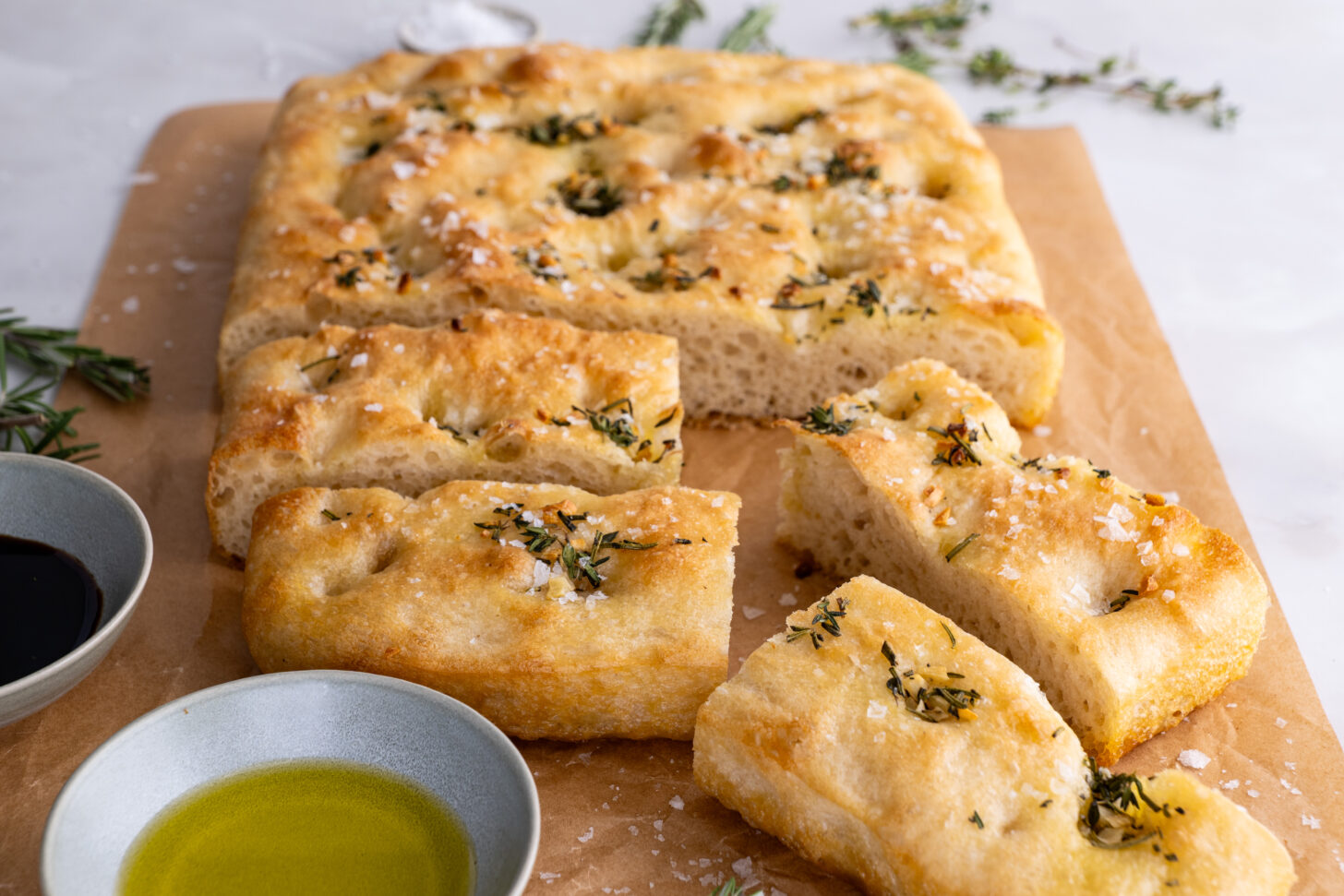
Great focaccia bread is all about balance. It should be soft but not doughy, flavorful but not greasy, and crisp on the edges without being dry. A few key elements make that happen.
Olive Oil Matters
Focaccia bread relies heavily on olive oil for both flavor and texture. Using a good quality extra virgin olive oil makes a noticeable difference. This is not the place to skimp. Olive oil keeps the dough moist, helps create that golden crust, and adds richness throughout.
You will notice olive oil used at multiple stages in a good focaccia bread recipe. It coats the dough, lines the pan, and is often drizzled generously on top. All of that oil works together to create the final texture and flavor.
Hydration Is Key
Focaccia bread dough is wetter than many other bread doughs. That higher hydration helps create large air pockets and a tender crumb. Sticky dough can feel intimidating if you are new to bread baking, but it is actually a good sign.
Resist the urge to add too much flour. Trust the process, oil your hands when needed, and let the dough do its thing.
Time Builds Flavor
Focaccia bread benefits from time. Allowing the dough to rise properly gives the yeast time to develop flavor and structure. A longer rise also makes the bread easier to digest and improves the texture.
Some bakers like to refrigerate the dough overnight after the first rise. This slow fermentation deepens the flavor and can make the bread even better.
Why Focaccia Bread Is Perfect for Beginners
If you are new to baking bread, focaccia bread is an excellent place to start. It does not require shaping, special equipment, or advanced techniques. The dough is meant to be rustic and forgiving.
Mistakes are easier to recover from, and the results are almost always delicious. Even slightly overproofed or underproofed focaccia bread still tends to taste good.
Because it bakes in a pan, you also do not need to worry about transferring dough or creating surface tension like you would with a loaf.
The Importance of Dimples
Those iconic dimples are more than just a visual signature. Pressing your fingertips into the dough serves a purpose. It redistributes air pockets and prevents the dough from rising too aggressively in the oven.
The dimples also create little wells that hold olive oil and herbs. This keeps the surface of the bread flavorful and helps it bake evenly.
When dimpling, do not be gentle. Press all the way down with your fingertips. Think of it as playing the piano, confident and deliberate.
Flavor Variations to Try
One of the best things about focaccia bread is how customizable it is. Garlic and herb is a classic starting point, but there are endless variations you can try once you are comfortable with this base recipe.
Caramelized onions, cherry tomatoes, olives, freshly grated parmesan cheese are all excellent toppings for this focaccia bread.
You can also experiment with different herbs. Sage, oregano, or even a mix of Italian herbs can change the flavor profile completely.
Seasonal toppings are another great option. Think roasted garlic and squash in the fall or fresh basil and tomatoes in the summer.
Serving Ideas for Focaccia Bread
Focaccia bread is incredibly versatile when it comes to serving. It works in tons of contexts.
Serve it warm as an appetizer with olive oil and balsamic vinegar for dipping. Pair it with soups, stews, or salads for an easy meal. Use it as sandwich bread by slicing it horizontally and filling it with meats, cheeses, and vegetables.
Leftover focaccia bread can be toasted and used for paninis or grilled sandwiches. It also makes excellent croutons when cubed and baked until crisp.
Storage and Reheating Tips
- Focaccia bread is best enjoyed the day it is baked, when the crust is crisp and the interior is soft. That said, it can still be stored and enjoyed later with a few simple tips.
- Store focaccia bread at room temperature in an airtight container for up to two days. Avoid refrigerating it, as that can dry it out.
- For longer storage, focaccia bread freezes well. Slice it before freezing so you can thaw only what you need. Reheat frozen slices in the oven to bring back some of that crispness.
- A quick warm up in the oven is always better than the microwave, which can make the bread chewy.
Common Mistakes and How to Avoid Them
- Even though focaccia bread is forgiving, there are a few common pitfalls to watch out for.
- Using water that is too hot can kill the yeast and prevent the dough from rising. Always check the temperature.
- Adding too much flour can result in dense bread. Sticky dough is normal and expected.
- Not using enough olive oil can lead to dry focaccia bread. Embrace the oil. It is part of what makes this bread so good.
- Rushing the rise can impact flavor and texture. Give the dough the time it needs.
What To Make With Garlic and Herb Focaccia Bread
Do you love this Garlic and Herb Focaccia recipe? Please leave a 5 star ⭐️⭐️⭐️⭐️⭐️ rating in the recipe card below ⬇️ and/or a review in the comment section further down.
Hungry for more? Follow Suburban Simplicity on Facebook, Instagram, YouTube, and Pinterest to see more DIYs, recipes, and home tips!
Also, don’t forget to sign up for email!
I only send one email a week, and it’ll include my latest recipes, DIYs, and tips, information about exclusive “email only” giveaways, and more! See form below!
Want to subscribe to the Suburban Simplicity Recipe Club? It’s only $5 per month, and you’ll get ad-free PDFs of any new recipes that I post while supporting me at the same time! Join the club, here.
Garlic and Herb Focaccia Bread
Ingredients
- 1 ¾ cups warm water, 105°F – 115°F
- 2 teaspoons honey, or cane sugar
- 1 ¼ ounce package active dry yeast (2 ¼ teaspoons)
- 4 cups all-purpose flour, spooned and leveled
- 2 teaspoons sea salt
- 6 -7 tablespoons extra virgin olive oil
- 2 – 3 cloves minced garlic
- 1 tablespoon chopped fresh rosemary, or 1 teaspoon dried
- 1 tablespoon chopped fresh thyme, or 1 teaspoon dried
- Flaky sea salt for sprinkling on top, so good

Equipment
- Spatula or cooking spoon
Instructions
- Activate Yeast: In the large bowl of a stand mixer, whisk warm water and honey (or sugar). Sprinkle yeast on top, stir gently, and let sit for 5–10 minutes until foamy. Note: It’s important you start with fresh yeast. If it doesn’t bloom, try another packet of yeast.
- Mix Dough: Add flour and 2 teaspoons sea salt to the bowl. Mix with a stand mixer fitted with the dough attachment on low speed until a shaggy dough forms. Increase speed to medium and mix for an additional 5 minutes. At this point, a sticky dough should form. You can also knead by hand on a flour surface for 5 minutes.
- First Rise: Lightly oil a large bowl with 2 tablespoons of olive oil. Use a rubber spatula and scrape the dough off the sides of the stand mixer bowl and place in the proofing bowl. Turn dough inside the bowl to coat it in the oil that’s pooling at the edges. Cover with a damp towel or plastic wrap and let rise in a warm spot until doubled in size, about 1 to 1.5 hours.
- Prepare Pan: Generously oil a 9×13-inch baking pan (with sides) with 2+ tablespoons olive oil. Uncover the dough and place some oil on your hands and fold the dough on itself until you have a ball you can move to the baking pan. Once it’s moved, turn to coat it in the olive oil in the pan. Press the dough out to the edges and let sit for a minute to relax. Then press it to the edges again. Cover and let rise again for 45 minutes. Preheat oven to 425°F (200°C) when there’s about 15 minutes left.
- Flavor & Dimple: Mix remaining olive oil (about 1–2 tablespoons) with minced garlic, rosemary, and thyme. Using your fingertips, press dimples all over the top of the dough (like you’re playing the piano). Drizzle herb-garlic oil evenly over the top, lightly spreading it with your hands if necessary. Sprinkle generously with flakey sea salt.
- Bake: Bake for 20–25 minutes, until golden brown. If desired, broil for the last minute to get it nice and crispy. Cool slightly, then slice into squares or strips and serve warm and enjoy!
Notes
- Make sure the water to activate the yeast is warm but not hot (too hot will kill the yeast.) Aim for bathwater-warm.
- A good-quality extra virgin olive oil really makes focaccia shine. Don’t be shy with the oil, it keeps the dough moist and flavorful.
- For extra crunch, brush the top with a little olive oil right before baking.
- Flavor Variations: Try topping with caramelized onions, cherry tomatoes, olives, or parmesan.
- Make Ahead: Dough can be refrigerated overnight after the first rise. Let it come to room temperature before pressing into the baking pan.