

How To Make Collard Greens
If you’ve ever wondered how to cook collard greens so they turn out tender, smoky, and not bitter, this is where you need to be! Fresh collard greens simmer low and slow with smoked ham hocks, onion, and garlic until they’re silky, then get a splash of apple cider vinegar and a pile of shredded ham stirred in at the end. It takes about 3 hours and 50 minutes, most of it hands-off, and it makes 8 servings.
Collard greens are the side dish most commonly found on Southern tables for Sunday dinner, Thanksgiving, and Christmas, and most famously on New Year’s Day, when they’re served with black-eyed peas for luck and money in the year ahead. Make a pot of these alongside my Southern black-eyed peas and you’ve got the classic New Year’s plate.
Below you’ll find everything you need to know: how to clean collard greens, how to cut them, how long to cook them, how to get the bitterness out, what to serve with them, and how to store and freeze the leftovers. If you just want the recipe, hit Jump to Recipe.
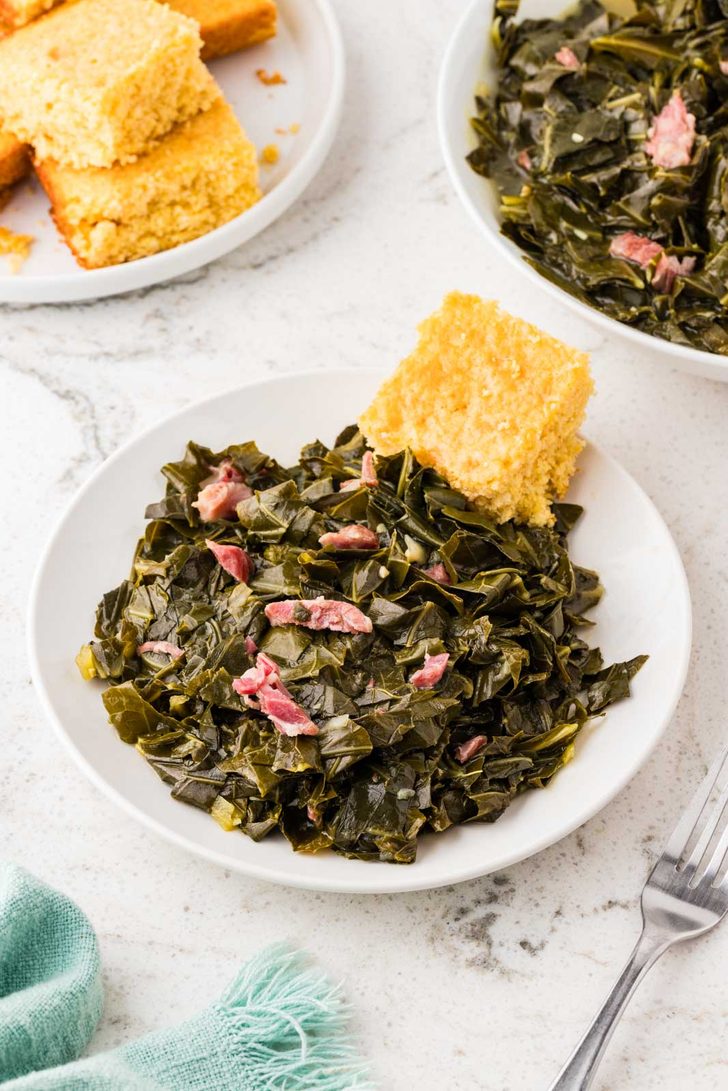
Collard Greens at a Glance
- What it is: Southern-style collard greens simmered with smoked ham hocks
- Prep time: 20 minutes
- Cook time: 3 hours 30 minutes (2 hours for the ham hocks, then 75 to 90 minutes with the greens)
- Total time: 3 hours 50 minutes
- Serves: 8 (about ¾ cup each)
- Tastes like: smoky, savory, a little tangy, and fork-tender
- Best for: Sunday dinner, holiday menus, and New Year’s Day
Why You’ll Love This Collard Greens Recipe
- They’re tender, not tough. A long, gentle simmer breaks the greens down until they’re silky.
- They aren’t bitter. Smoked ham hocks, apple cider vinegar, and a little sugar balance the natural bite of the greens.
- They’re mostly hands-off. Once the prep is done, the pot does the work.
- They’re make-ahead friendly. Cook them a day or two before your big meal and reheat on the stove.
- You get real potlikker. That smoky, savory broth at the bottom of the bowl is the best part.
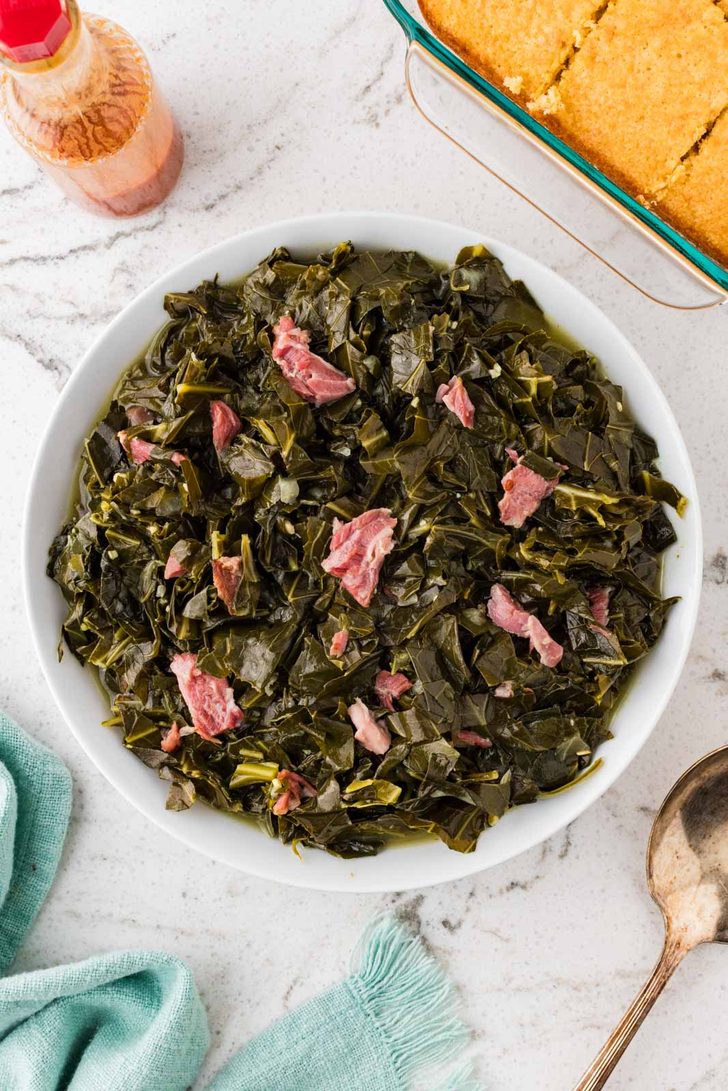
Why Do We Eat Collard Greens on New Year’s Day?
In the American South, people eat collard greens on New Year’s Day because the big, flat green leaves look like folded paper money, so a plate of them is believed to bring prosperity in the new year. Their hardiness also stands for getting through the tough stuff.
The classic New Year’s plate goes like this: collard greens for dollar bills, black-eyed peas for coins, and cornbread for gold. Some people take the black-eyed peas very seriously and eat exactly 365 of them, one for every day of the year, and others hide a coin in the pot.
The tradition traces back to African American cooks and to the West African foods and customs they carried with them. Black-eyed peas arrived with enslaved West Africans, who long considered them lucky. There are a few competing stories about exactly how the New Year’s tradition took hold, so you’ll hear it told more than one way.
If you’re planning a New Year’s menu, start with my Southern black-eyed peas, add this pot of collard greens, and bake a pan of cornbread to soak up the potlikker. If you want pork on the table too, my one pan pork chops with potatoes round things out.
Equipment You’ll Need
- Colander
- Cutting board
- Chef’s knife
- Measuring cups and measuring spoons
- 6- to 8-quart Dutch oven or large heavy-bottomed pot with a lid
- Wooden spoon
- Tongs
- Fork
- Ladle
How to Clean Collard Greens
Collard greens grow close to the ground, so they hold on to sand and grit. A quick rinse under the faucet won’t cut it.
Fill a clean sink or a very large bowl with cool water and add the leaves. Swish them around with your hands, then lift the leaves out and set them in a colander. Don’t dump the water out with the leaves still in it, or the grit goes right back on them. Drain the sink, rinse it, and repeat until you don’t see any sand at the bottom. It usually takes two or three rounds.
Take the stems out before you wash if you can, since the stems trap dirt too.
How to Cut Collard Greens
- Remove the stems. Fold a leaf in half along the center stem and slice the stem away, or run your knife down both sides of the stem. Toss the stems.
- Stack the leaves. Pile five or six leaves on top of each other and roll them up like a cigar.
- Slice into strips. Cut across the roll to make strips about 1 inch wide. Don’t go much smaller, because the greens shrink a lot as they cook.
- Weigh them. You want 2 pounds of prepared greens, weighed after the stems are gone and the leaves are chopped.
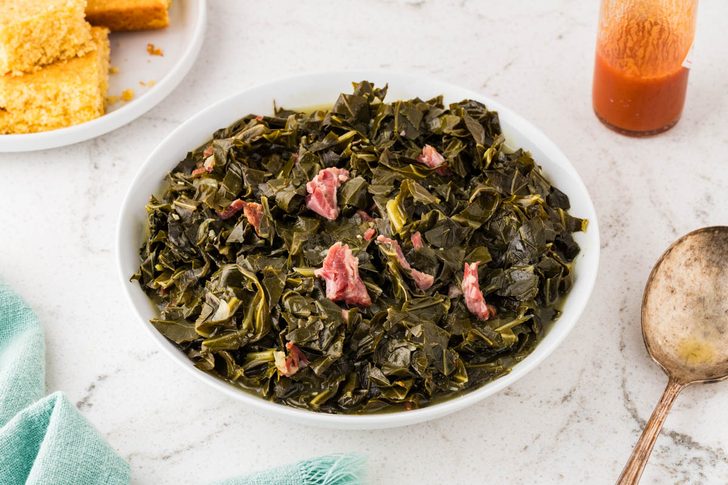
What Are Collard Greens?
Collard greens are a leafy green vegetable from the brassica family, the same family as cabbage, broccoli, and kale. The leaves are large, flat, and sturdy, with a thick stem running down the center. Raw, they’re tough and a little bitter. Cooked low and slow, they turn tender, earthy, and mellow, and they soak up the flavor of whatever you cook them in.
What do collard greens taste like? Think of a milder, earthier cousin of cabbage and kale. The bitterness comes from natural compounds in the leaves, and sweetness, acid, smoke, and long cooking all tone it down.
Are collard greens good for you? Yes. They’re a good source of vitamins A, C, and K, plus folate, calcium, and iron. They taste best in the colder months, which is part of why they’re such a fall and winter staple.
Collard Greens Ingredients and Substitutions
You don’t need a long grocery list for this one. Most of the flavor comes from the ham hocks and a slow simmer.
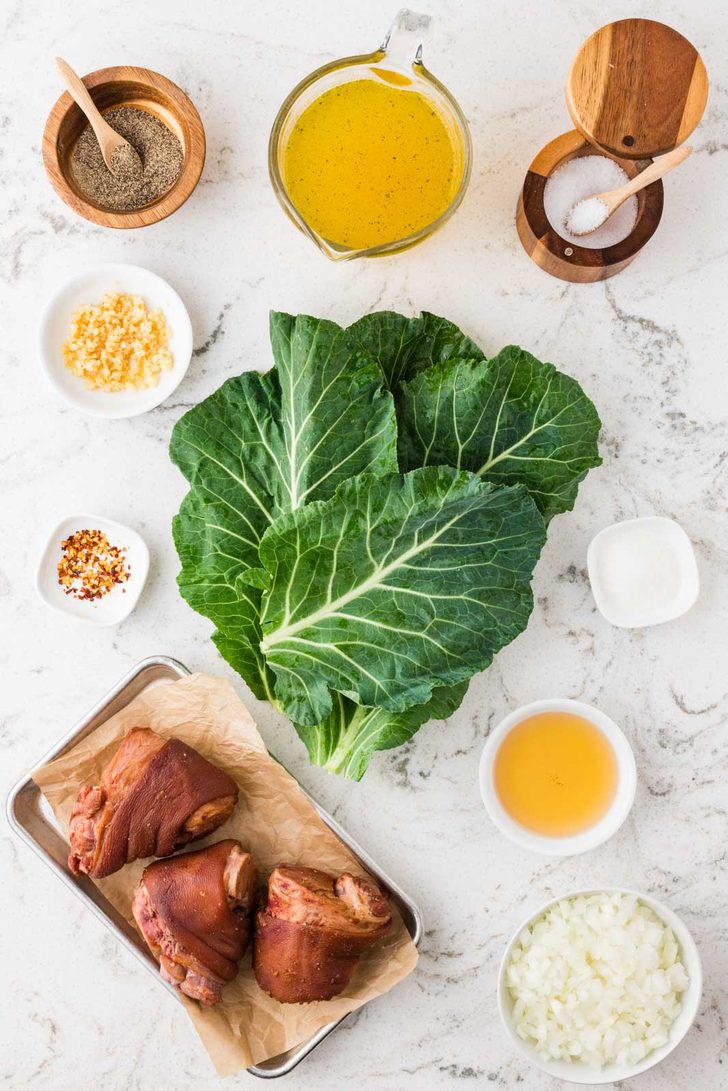
- Smoked ham hocks (3): These give the greens their smoky, savory flavor and enrich the cooking liquid. Smoked turkey legs are a good swap if you don’t eat pork.
- Collard greens (2 pounds, prepared): This is the weight after you remove the tough stems and chop the leaves. Fresh whole greens work best. Buy a bit more than you think you need, because they shrink a lot as they cook.
- Yellow onion (1 cup, diced): About one medium onion. It adds sweetness and savory depth. A sweet or white onion works too.
- Garlic (4 cloves, minced): It plays nicely with the smoke from the ham hocks.
- Ground black pepper (½ teaspoon): A little warmth to balance the richness.
- Crushed red pepper flakes (¼ teaspoon, optional): Just enough heat to wake things up without overpowering the greens. Leave them out if you’d rather skip the spice.
- Low-sodium chicken broth (7 cups): This is your flavorful base. Reduced-sodium broth works too. Vegetable broth is an option, but the finished greens will be a little less savory.
- Apple cider vinegar (2 tablespoons): It brightens the smoky broth and cuts through the richness of the pork.
- Granulated sugar (2 teaspoons, optional): It softens any leftover bitterness. Light brown sugar works as a swap, and you can skip it entirely.
- Kosher salt (to taste): Add it last. Smoked ham hocks release a lot of salt as they cook, so taste the broth first.
How to Make Collard Greens (Step by Step)
This is the short, friendly version. The full recipe card with exact measurements is at the bottom of the post.
Step 1: Simmer the ham hocks
Add the ham hocks, diced onion, minced garlic, black pepper, and red pepper flakes to a 6- to 8-quart Dutch oven. Pour in 6 cups of the broth and save the last cup for later. Bring it to a gentle boil over medium-high heat, then turn the heat down to low, cover, and simmer for about 2 hours. You want the ham hocks tender and the meat starting to pull away from the bone. Check it every 30 minutes and add a splash of the reserved broth if the hocks aren’t staying partly submerged.
Step 2: Prep the greens
While the ham hocks simmer, rinse the collard greens well, remove the stems, and cut the leaves into 1-inch strips. Weigh out 2 pounds.
Step 3: Add the greens in batches
Use tongs to move the ham hocks to a plate and let them cool until you can handle them. Then add the greens to the pot a handful at a time, stirring and letting each batch wilt before you add more. A big pile of raw greens shrinks down fast.
Step 4: Simmer until very tender
Cover the pot and simmer over low heat for 75 to 90 minutes, stirring now and then, until the greens are very tender. Keep an eye on the liquid and add a little more broth if the pot starts to look dry.
Step 5: Pull the ham hock meat
While the greens simmer, pull the meat off the ham hocks. Throw away the bones, skin, fat, and cartilage. Chop the meat into bite-sized pieces, check carefully for little bone fragments, and stir it back into the pot for the last 10 to 15 minutes.
Step 6: Season and serve
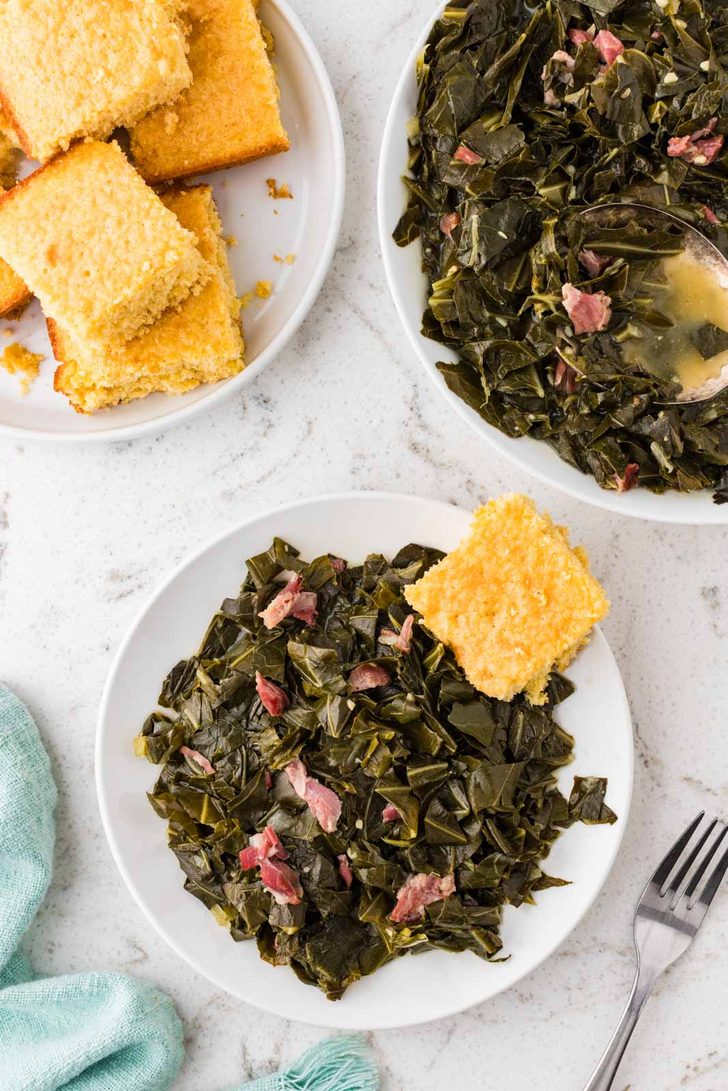
Stir in the apple cider vinegar and the sugar, if you’re using it. Taste the broth, then add kosher salt a little at a time. Serve the collard greens warm with the shredded ham and a big spoonful of that broth.
Tips for the Best Collard Greens
- Simmer, don’t boil hard. A gentle simmer tenderizes the ham hocks and builds a rich, smoky broth. A rolling boil toughens the meat and cooks off your liquid.
- Salt at the end. Smoked ham hocks can be really salty, so wait until the greens are done to taste and season.
- Add the greens in batches. They’ll look like way too much at first. Let each handful wilt before adding the next.
- Keep the pot covered. The lid keeps the greens from drying out. Check the liquid now and then and add broth if you need to.
- Cook by feel, not just the clock. The greens are ready when they’re silky and a fork slides right through the thickest part.
- Check the meat for bones. Pull it apart slowly so no small bone pieces end up in anyone’s bowl.
More New Year’s Day and Southern Recipes You’ll Love
- Southern black-eyed peas
- Cheesy scalloped potatoes
- Limoncello ricotta cake
- Easy yeast rolls
- Pimento cheese
- Summer heirloom tomato pie
- One pan pork chops with potatoes
Why Are My Collard Greens Bitter? (And How to Fix It)
Bitter collard greens usually come down to a few things: the stems were left in, the greens didn’t cook long enough, or the pot was missing something to balance the bite. Here’s how to fix each one.
- Take out the thick stems. They’re tough and bitter, so cut them out before cooking.
- Cook them longer. The compounds that cause bitterness break down with long, gentle heat. If your greens still taste sharp, give them more time on low.
- Use smoked meat. The fat, salt, and smoke from the ham hocks mellow the greens.
- Add acid and a little sugar. The apple cider vinegar and sugar in this recipe are there on purpose. If the pot still tastes sharp, add another splash of vinegar or a pinch more sugar.
- Season well. Under-salted greens taste flat and more bitter. Salt at the end, a little at a time.
- Blanch first if you’re short on time. Boil the greens for about 1 minute, then move them to an ice bath. Drain, then add them to the pot.
Collard Greens Variations
- Smoked turkey collard greens: Use smoked turkey legs or wings in place of the ham hocks. Simmer them the same way until the meat is tender and pulls off the bone.
- Bacon collard greens: Cook some chopped bacon in the Dutch oven first, then add the onion, garlic, and broth. The greens still need their long, gentle simmer, about 75 to 90 minutes.
- Vegetarian collard greens: Use vegetable broth and add a little smoked paprika or hickory-smoked salt to bring in some smokiness. The flavor will be lighter, but still good.
- Spicy collard greens: Add more crushed red pepper flakes, or pass hot sauce or pepper vinegar at the table.
- Mixed greens: Swap in some turnip greens or mustard greens for part of the collards if that’s what you have.
- Less sweet: Skip the sugar, or use light brown sugar if you want a deeper flavor.
What to Serve with Collard Greens
Collard greens are a side dish, so they need something to keep them company. These are my favorite pairings.
- Southern black-eyed peas: The classic partner, especially on New Year’s Day.
- Cornbread: For soaking up every drop of potlikker.
- Easy yeast rolls: Soft and fluffy, and they do the same job as cornbread.
- One pan pork chops with potatoes: A simple weeknight main to go with the greens.
- One-pot sausage and chicken jambalaya: Another Southern comfort food favorite.
- Classic crab cakes: A fun way to dress up a Southern dinner.
- Cheesy scalloped potatoes: Creamy and rich next to tangy, smoky greens.
- Cornbread dressing with sausage, apples, and cranberries: For your Thanksgiving or Christmas table.
- Fried chicken: A Sunday dinner staple that was practically made for collard greens.
How to Store, Freeze, and Reheat Collard Greens
Refrigerator: Store leftover collard greens with some of their cooking liquid in shallow, airtight containers for up to 3 to 4 days. Get them into the fridge within 2 hours of cooking.
Freezer: Let the greens cool, then freeze them with their liquid in freezer-safe containers for up to 2 to 3 months for the best quality. They may soften a little after thawing.
Make ahead: Collard greens are one of the best make-ahead sides. Cook them 1 to 2 days before you plan to serve them, refrigerate right away, and reheat before serving.
Reheating: Warm refrigerated or thawed greens in a covered saucepan over medium-low heat, stirring now and then, until they reach 165°F. Add a splash of chicken broth if they look dry.
Collard Greens FAQs
How long does it take to cook collard greens?
Collard greens take about 75 to 90 minutes of simmering once they’re in the pot, and this recipe takes about 3 hours and 50 minutes start to finish because the ham hocks simmer for 2 hours first. Cook them until they’re very tender and a fork slides easily through the thickest part.
Do you have to remove the stems from collard greens?
Yes, take out the thick center stem before cooking. The stems are tougher and more bitter than the leaves, and they don’t soften as nicely. Fold each leaf in half and slice the stem away.
How do you get the bitterness out of collard greens?
Cook the greens low and slow, use smoked meat, and finish with apple cider vinegar and a little sugar. Remove the stems, season well, and give them enough time. If they still taste sharp, add another splash of vinegar.
How do you wash collard greens?
Swish the leaves in a sink full of cool water, lift them out, and drain the sink. Repeat until no sand or grit is left at the bottom. It usually takes two or three rounds.
Why do you put vinegar in collard greens?
Apple cider vinegar brightens the smoky broth and balances the richness of the pork. It also helps tame the natural bitterness of the greens.
Why do you put sugar in collard greens?
A small amount of sugar softens the bitter edge of the greens. This recipe uses 2 teaspoons, and it’s optional. Light brown sugar works too.
What is potlikker?
Potlikker, also spelled pot liquor, is the smoky, savory broth left in the pot after the greens cook. It’s full of flavor and nutrients, and Southern cooks treat it as the best part. Spoon it over the greens and serve cornbread for dunking.
What can I use instead of ham hocks?
Smoked turkey legs or wings work well. You can also use bacon or salt pork. For a vegetarian pot, use vegetable broth and add smoked paprika or hickory-smoked salt.
Can I make collard greens without meat?
Yes. Use vegetable broth, keep the onion, garlic, and vinegar, and add a smoky seasoning like smoked paprika. The flavor will be lighter than the version with ham hocks, but still good.
Can I use frozen collard greens?
Fresh collard greens give the best texture, so I’d stick with fresh if you can. Frozen greens can work in a pinch and can go right into the pot. Keep checking for tenderness, since the cooking time may be different.
How many collard greens do I need?
You need 2 pounds of prepared greens, weighed after the stems are removed and the leaves are chopped. Buy extra, since the stems add weight and the greens shrink a lot as they cook.
Can you overcook collard greens?
You can. Greens that cook for too long or at too high a heat can turn mushy. Keep the simmer low and gentle and start checking for tenderness near the end of the 75 to 90 minutes.
Why do you eat collard greens on New Year’s Day?
In the American South, collard greens are a New Year’s Day tradition because their green leaves look like paper money, so eating them is thought to bring wealth and good luck in the new year. They’re usually served with black-eyed peas, which stand for coins. Try my Southern black-eyed peas to go with them.
Are collard greens healthy?
Collard greens are a good source of vitamins A, C, and K, as well as folate, calcium, and iron. They’re a hearty, nutrient-dense green, and the broth is full of flavor too.
Make This a New Year’s Tradition
A pot of collard greens takes some time, but it’s the kind of cooking that mostly looks after itself. Put the ham hocks on, put your feet up, and come back when it’s time to deal with the greens. Serve them with black-eyed peas and cornbread on January 1st and you’re set for good luck, or at least a really good dinner.
If you make this recipe, I’d love it if you left a star rating and a comment below. And if you tag me on Instagram, I’ll see i
Love this recipe? Please leave a 5-star ⭐️⭐️⭐️⭐️⭐️ rating in the recipe card below ⬇️ and/or a review in the comment section further down.
Hungry for more? Follow Suburban Simplicity on Facebook, Instagram, YouTube, and Pinterest to see more DIYs, recipes, and home tips!
Also, don’t forget to sign up for email!
I only send one email a week, and it’ll include my latest recipes, DIYs, and tips, information about exclusive “email only” giveaways, and more! See form below!
Want to subscribe to the Suburban Simplicity Recipe Club? It’s only $5 per month, and you’ll get ad-free PDFs of any new recipes that I post while supporting me at the same time! Join the club, here.
Collard Greens
Ingredients
- 3 smoked ham hocks
- 1 cup yellow onion, diced (about 1 medium onion)
- 4 garlic cloves, minced
- ½ teaspoon ground black pepper
- ¼ teaspoon crushed red pepper flakes, optional
- 7 cups low-sodium chicken broth, plus more if needed
- 2 pounds prepared collard greens, weighed after removing tough stems and chopping
- 2 tablespoons apple cider vinegar
- 2 teaspoons granulated sugar, optional
- Kosher salt, to taste

Equipment
- Spatula or cooking spoon
- Colander
- cutting board
Instructions
- Place 3 smoked ham hocks, 1 cup diced yellow onion, 4 minced garlic cloves, ½ teaspoon ground black pepper, and ¼ teaspoon crushed red pepper flakes (if using) in a 6- to 8-quart Dutch oven or large heavy-bottomed pot. Pour in 6 cups low-sodium chicken broth, reserving 1 cup for later if needed.
- Bring the broth to a gentle boil over medium-high heat. Reduce the heat to low, cover, and simmer for approximately 2 hours, until the ham hocks are tender and the meat begins to pull away from the bones. Check every 30 minutes to maintain a gentle simmer, adding some of the reserved broth as needed to keep the ham hocks partially submerged.
- While the ham hocks simmer, thoroughly rinse the collard greens. Remove the tough center stems and cut the leaves into approximately 1-inch strips. Weigh out 2 pounds of prepared greens.
- Using tongs, transfer the ham hocks to a plate and let them rest until they can be handled safely. Add the prepared collard greens to the simmering broth in batches, stirring and allowing each batch to wilt before adding more.
- Cover and simmer the greens over low heat for 75 to 90 minutes, stirring occasionally, until very tender. Keep enough broth in the pot to prevent the greens from drying out, adding a little more if needed.
- As the greens simmer, separate the meat from the ham hocks, discarding the bones, skin, fat, and cartilage. Cut the meat into bite-sized pieces and add it back to the greens during the final 10 to 15 minutes of cooking. Be sure to check carefully for any bone fragments.
- Stir in 2 tablespoons apple cider vinegar and 2 teaspoons granulated sugar, if using. Taste the broth and season with kosher salt as needed.
- Serve the collard greens warm with the shredded ham and a generous spoonful of the flavorful broth. ENJOY!
Notes
- Simmer the ham hocks gently rather than boiling vigorously. This lets the meat tenderize while developing a rich, smoky broth.
- Add the collard greens in batches if they don’t fit into the pot all at once. They will shrink considerably as they wilt.
- Keep the pot covered during cooking, and check the liquid level occasionally. Add additional broth if needed to prevent the greens from drying out.
- Smoked ham hocks can be quite salty, so wait until the end of cooking before adding kosher salt.